Ait Bouguemez Trek
Rewriting What Trekking Means to Me
Story by Steve Fagan
For most of my life, I have associated trekking with going high—with being surrounded by dramatic, rugged mountains and spending long days climbing upward. I love the sustained effort, the expansive views, and the exhilarating yet peaceful feeling that comes with reaching a destination. I have been fortunate to experience that kind of trekking often; in my backyard in the Rocky Mountains of Canada, but also in the Alps of Switzerland, on the summit of Kilimanjaro, and deep in the Himalayas of Nepal, Tibet, and Bhutan. Those journeys shaped my expectations of what a trek should be.
So when a friend suggested that I spend time trekking in Morocco’s High Atlas Mountains, I was skeptical.
I knew Morocco as a land of deserts, coastlines, and ancient cities. I was only vaguely aware that it was also home to several mountain ranges. A bit of research quickly filled in the facts — Mount Toubkal rises to 4,167 meters, the highest peak in North Africa — but it was not elevation that drew me in. What captured my attention were images of wide, fertile valleys carved between walls of red rock, interwoven with terraced farmland and small villages where daily life appeared inseparable from the land itself.
That search led me to the Ait Bouguemez and Ait Boulli valleys, tucked deep within the central High Atlas. Often referred to as the “Happy Valley,” Ait Bouguemez is home to Amazigh (Berber) communities whose lives remain closely tied to agriculture, seasonal rhythms, and extended family networks rooted in place. This would not be a trek defined by altitude or summits. It would be about walking through lived landscapes—through villages, orchards, and fields—and meeting the people who call them home.
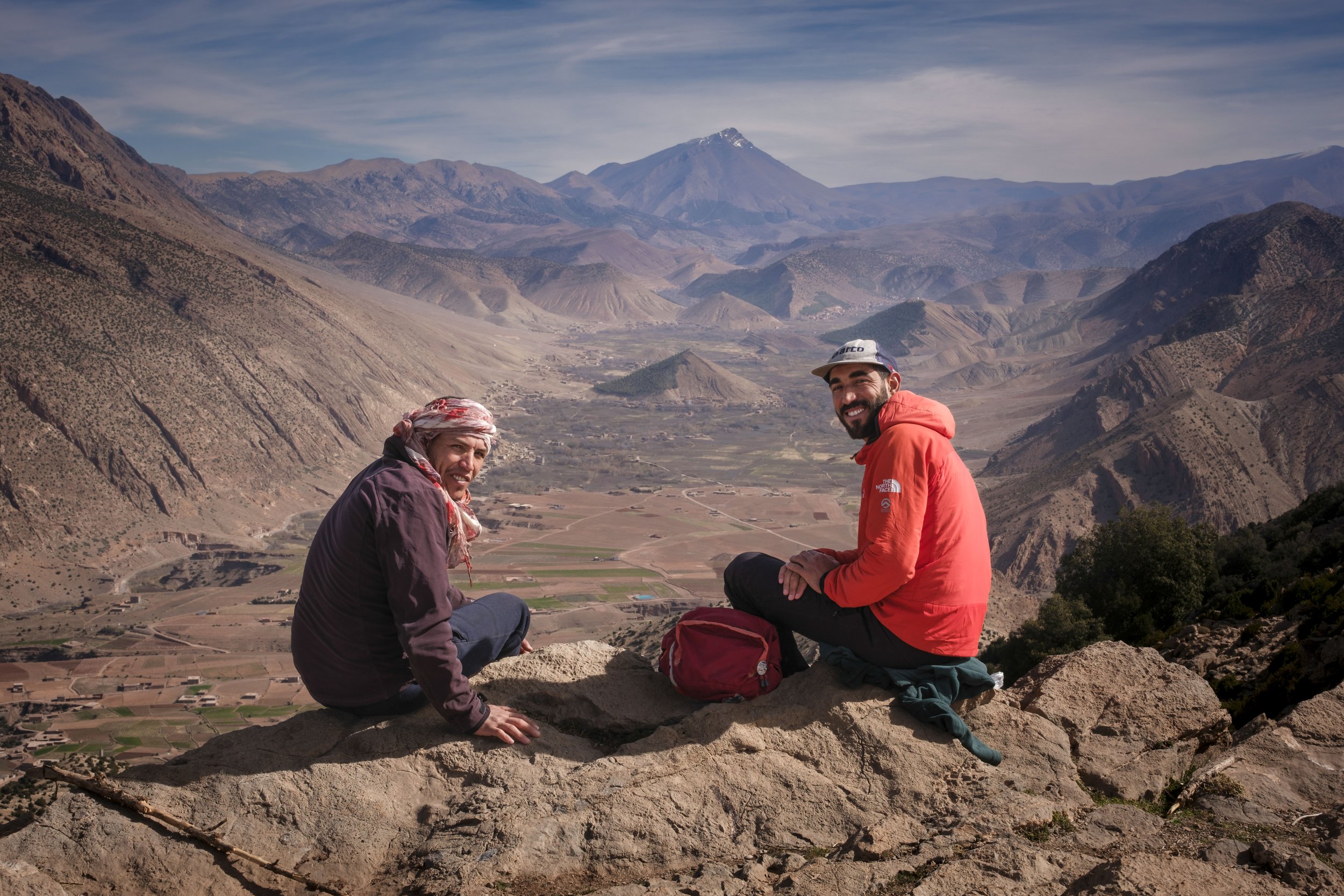
My trek began in the village of Zawyat Oulmzi, at the eastern edge of Ait Bouguemez, roughly a five-hour drive to the east of Marrakech. For the next sixteen days, I walked with Essaid Ait Lahcen, my guide, and Ali Akhndafe Amazigh, my cook and mule owner. Both were born and raised in small villages within the Ait Bouguemez valley. This was not simply terrain they knew; it was a place shaped by family ties, friendships, and a lifetime of familiarity.
Ali and Essaid with Ait Bouguemez Valley in their background
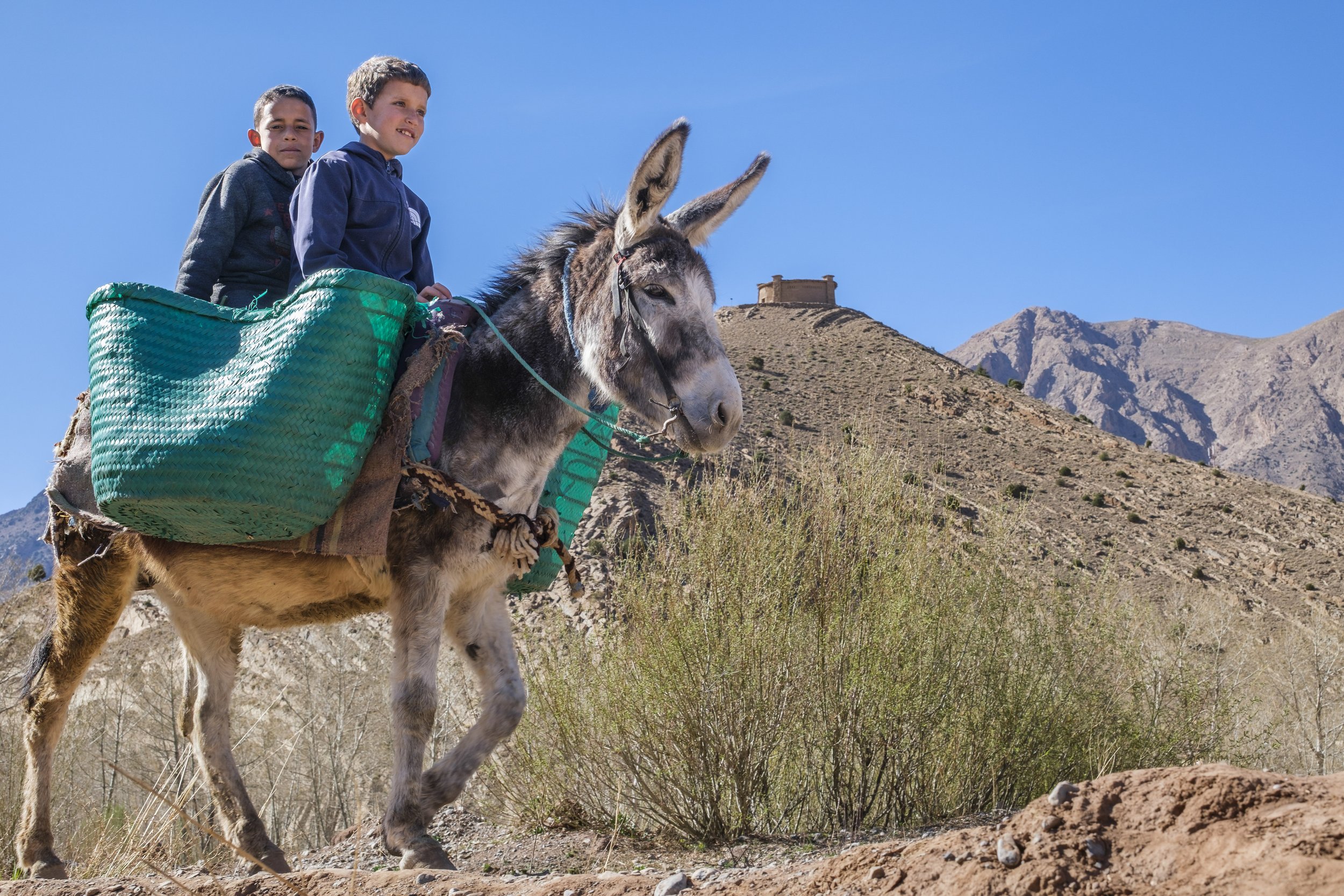
Essaid and Ali had worked together many times. They were friends, not just colleagues, and their ease with one another set the rhythm of each day. Ali’s responsibility was the steady, practical work that made the trek possible. Wherever we stopped — on a mountainside, beside a river, in an orchard, or in someone’s home — he skillfully prepared our meals, adapting effortlessly to changing conditions. His mule carried the food, cooking equipment, and clothing that allowed us to move simply and steadily through the valleys.
Essaid guided the journey itself. He designed the route — nearly 200 kilometers through the valleys — connecting villages where accommodation was arranged in the homes of relatives, friends, and friends of friends. We walked mostly on secluded trails high along valley walls and ridgelines, but also on paths and roads through villages, sleeping in homes at elevations ranging from 1,800 to 2,700 meters. As we walked, Essaid became more than a guide; he was a teacher, helping me understand the land, the rhythms of life, and the customs that shaped daily existence in the valley.
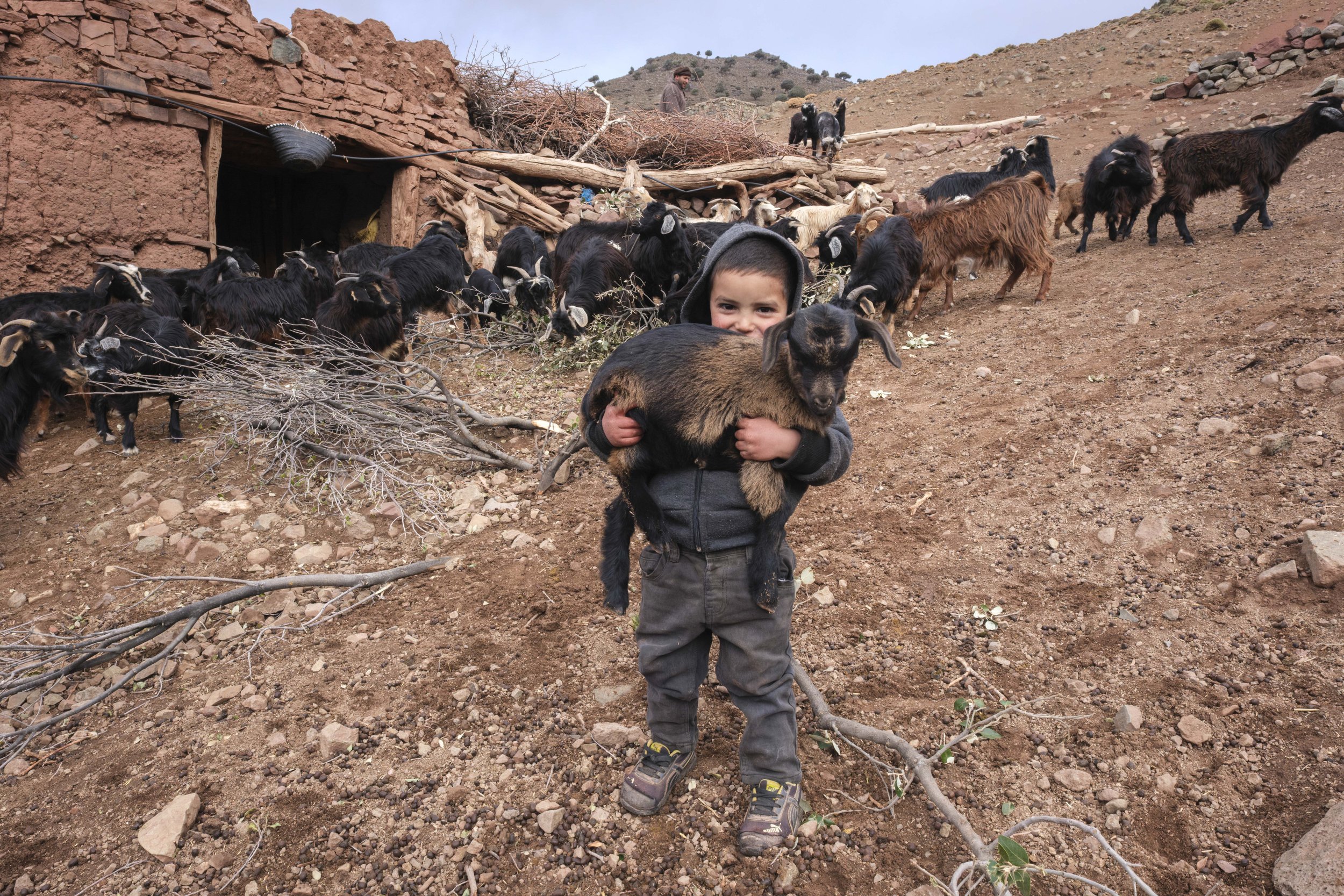
More important than logistics was trust. Essaid understood that my interest was not only in landscapes, but in people — meeting them, spending time with them, and, when appropriate, photographing them as they lived their lives. At the same time, he was deeply protective of the communities we passed through, particularly of women and family spaces, out of respect for local traditions, cultural norms, and the values of the Muslim faith. Photography here required permission, sensitivity, and restraint. Many moments were simply not meant to be photographed, and Essaid made that clear. His priority was always the comfort and dignity of the people welcoming us into their homes, even if that meant I set my camera aside.
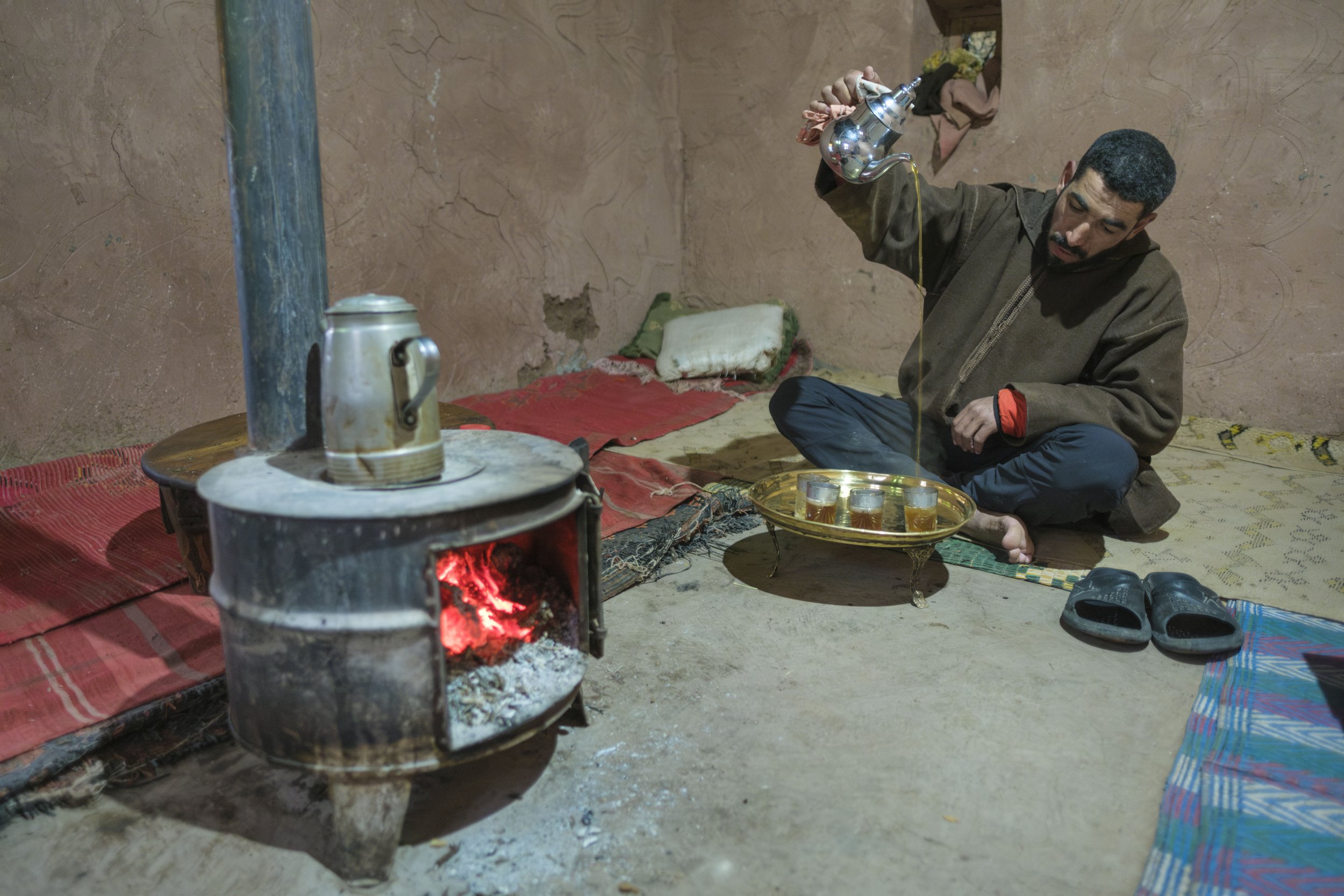
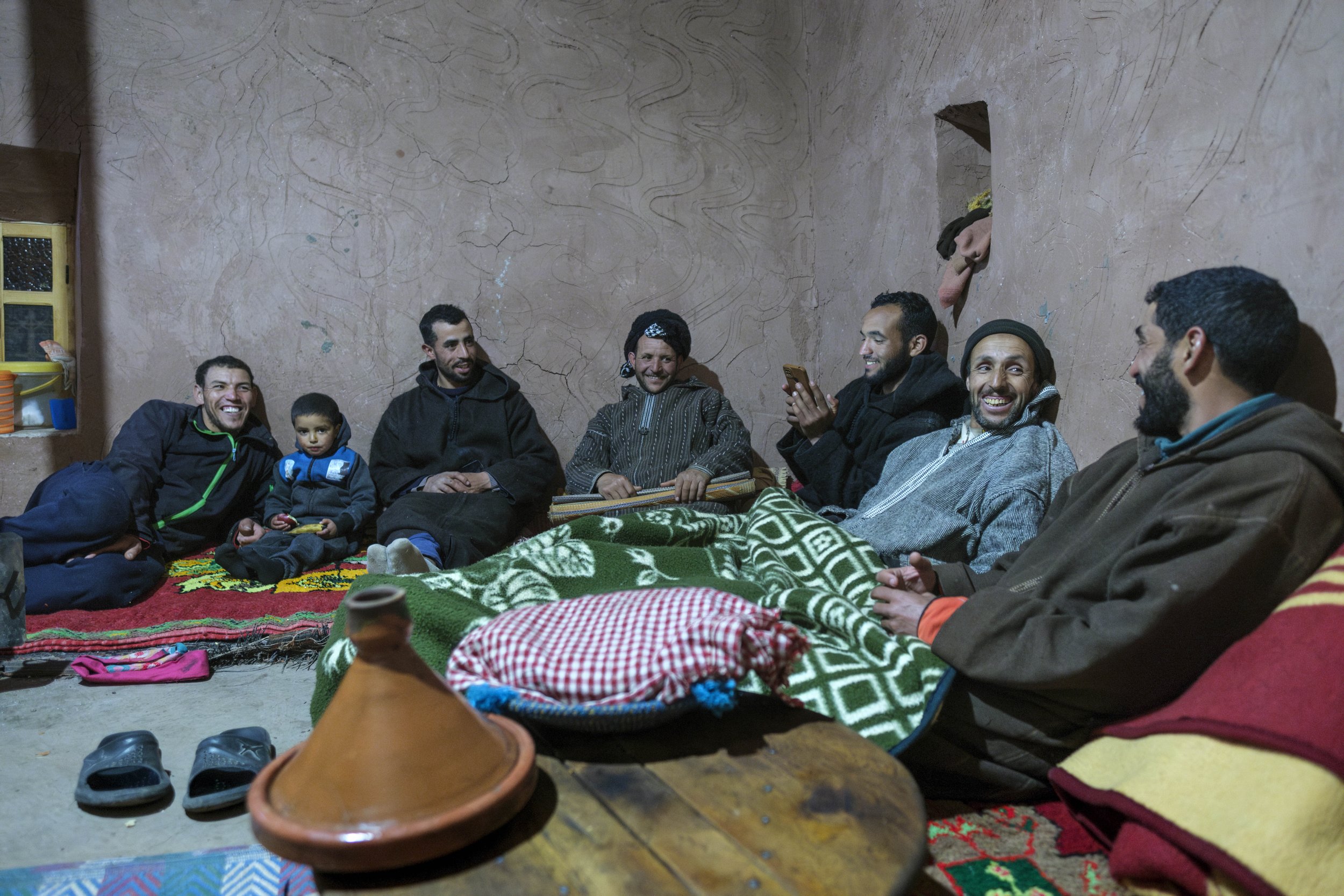
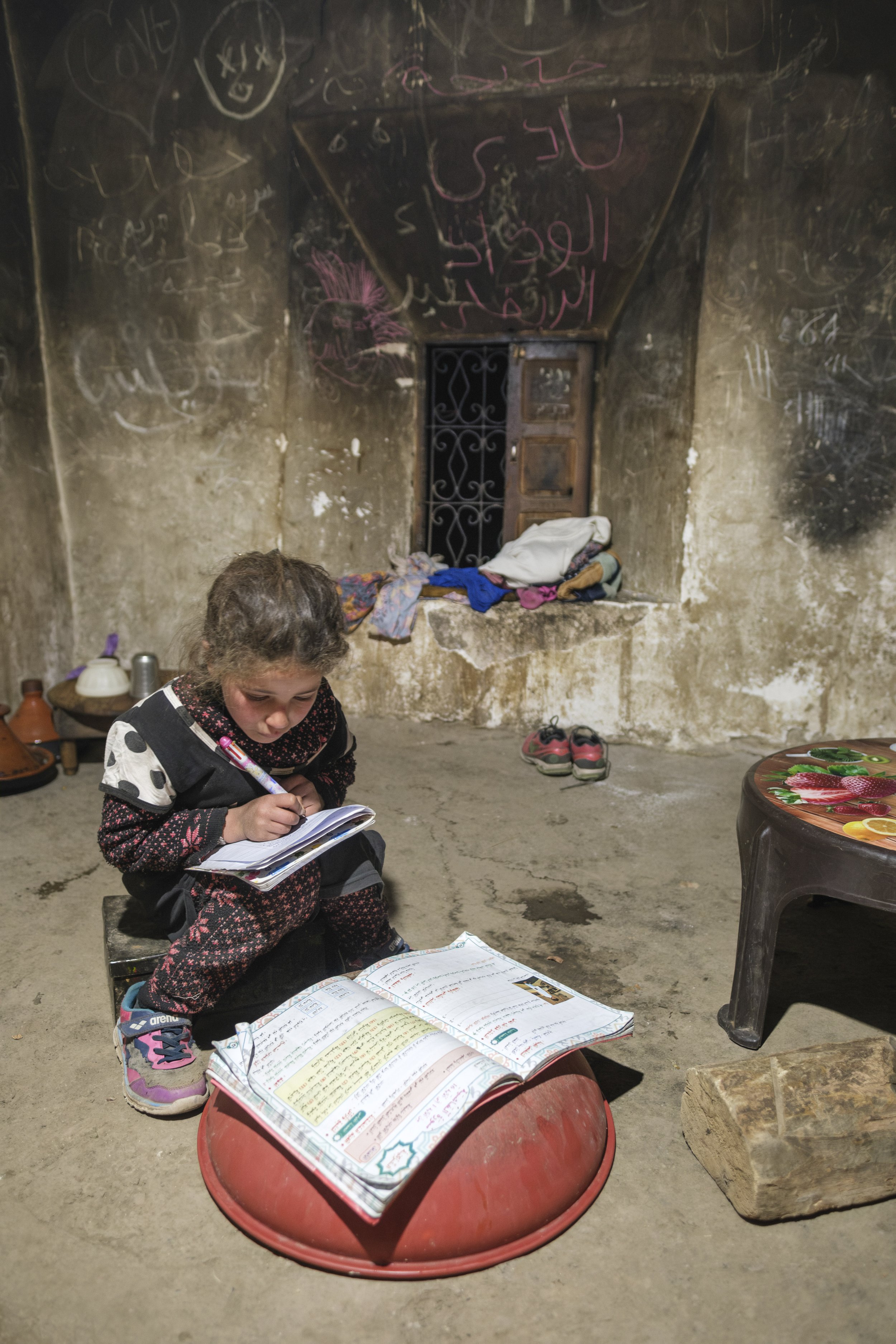
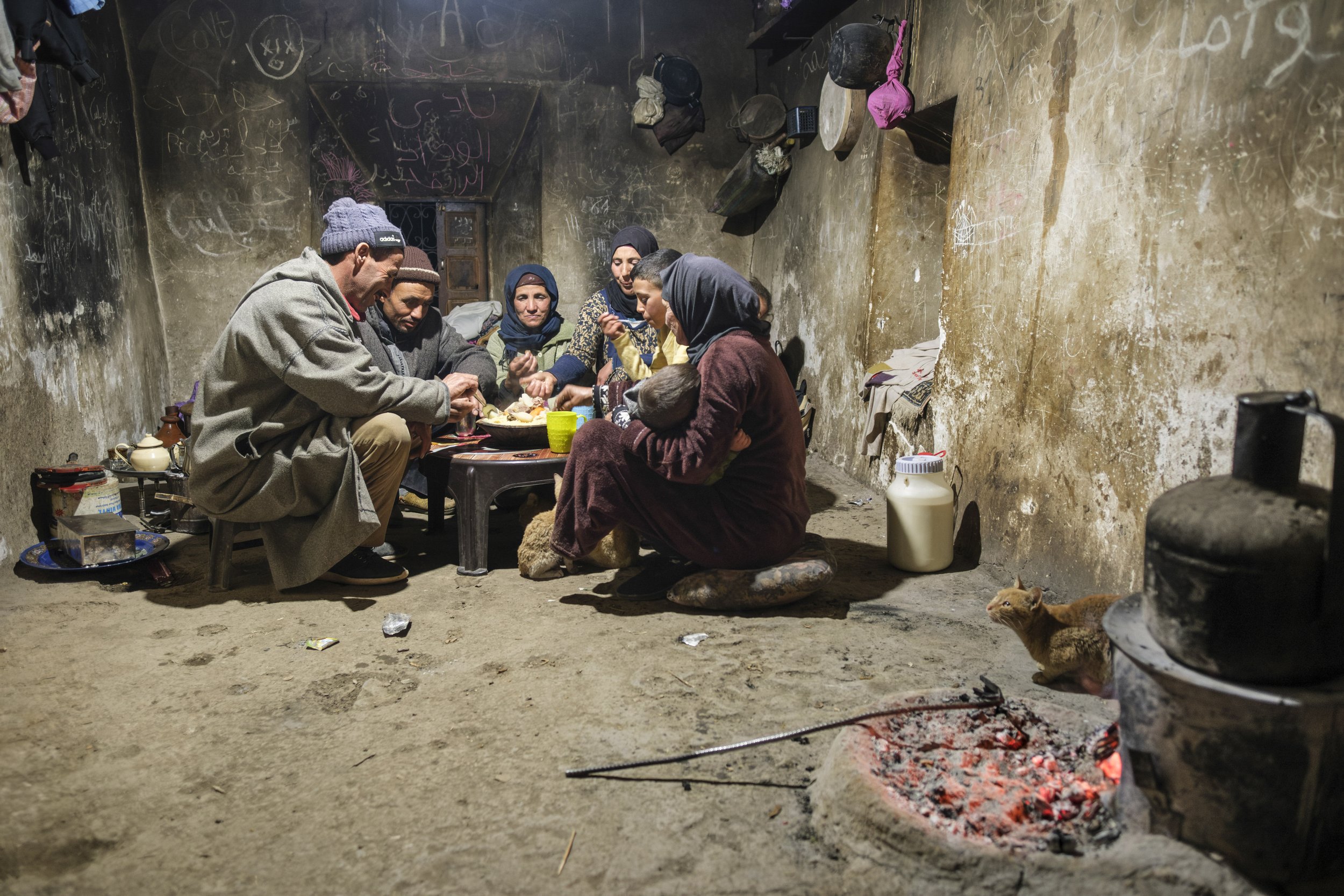
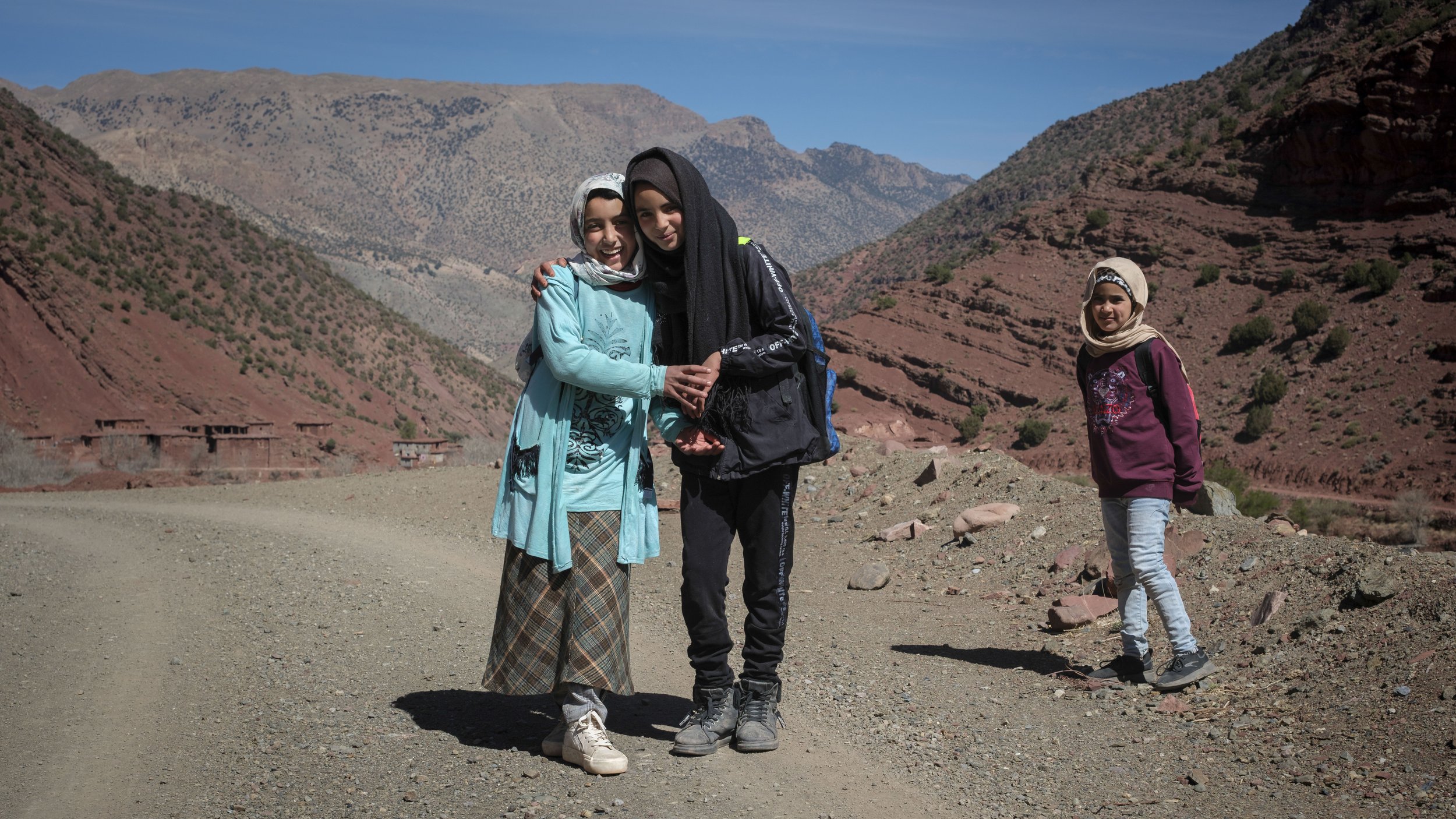
In a few rare cases, that trust opened doors — quiet kitchens, shared meals, children at play — but only when it felt natural and unforced. Those moments mattered precisely because they were never assumed. Walking through these valleys with people who understood both the land and the people who live upon it shaped the experience in ways that went far beyond the route itself.
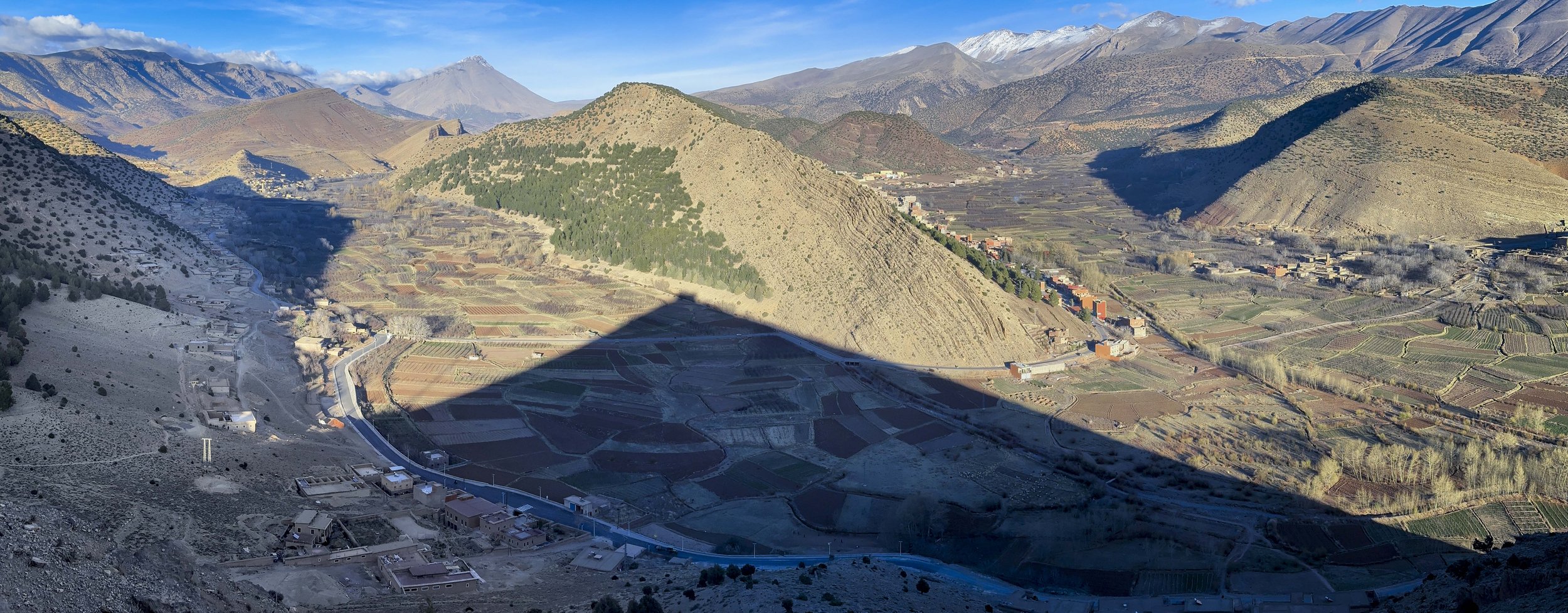
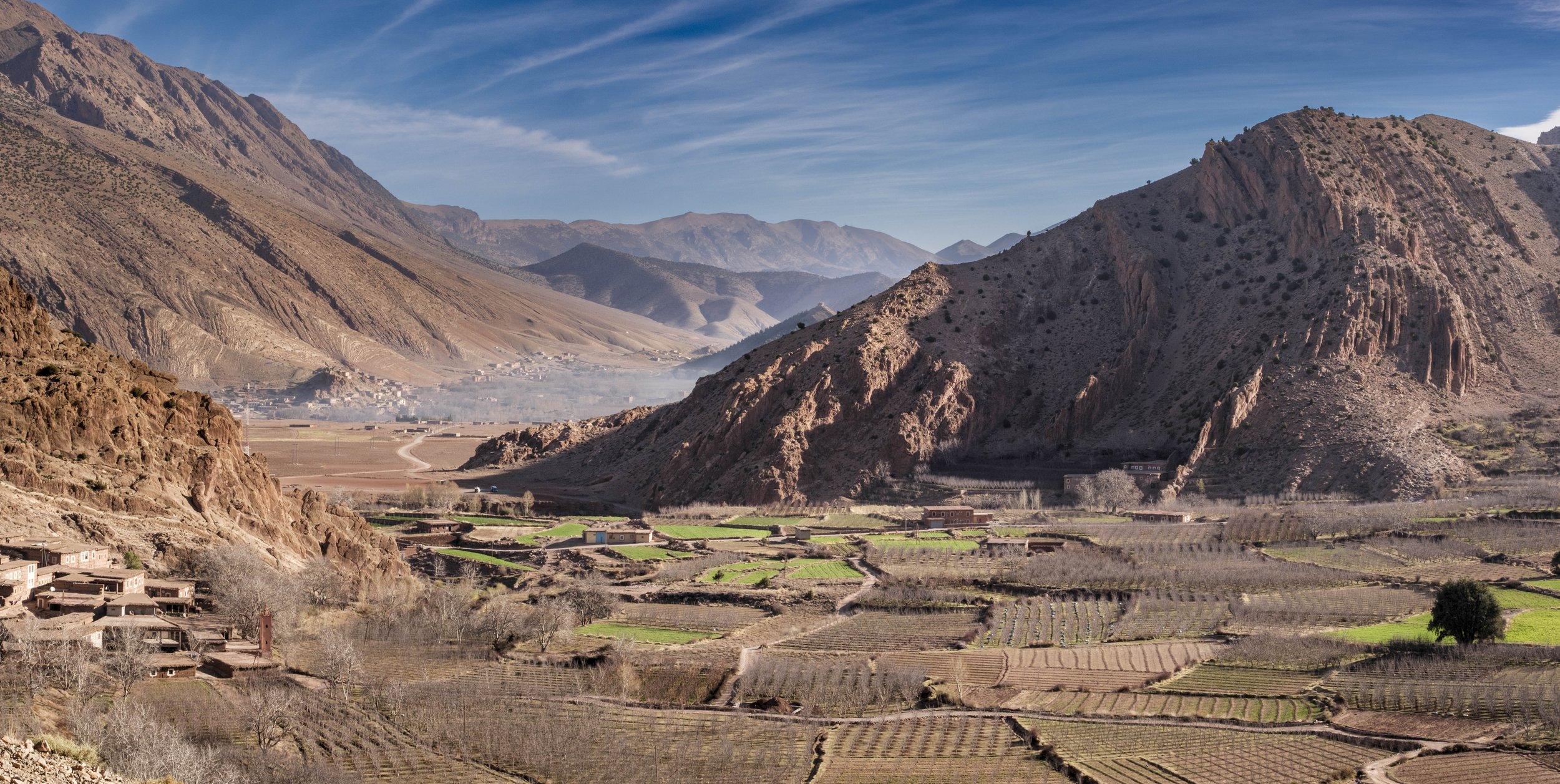
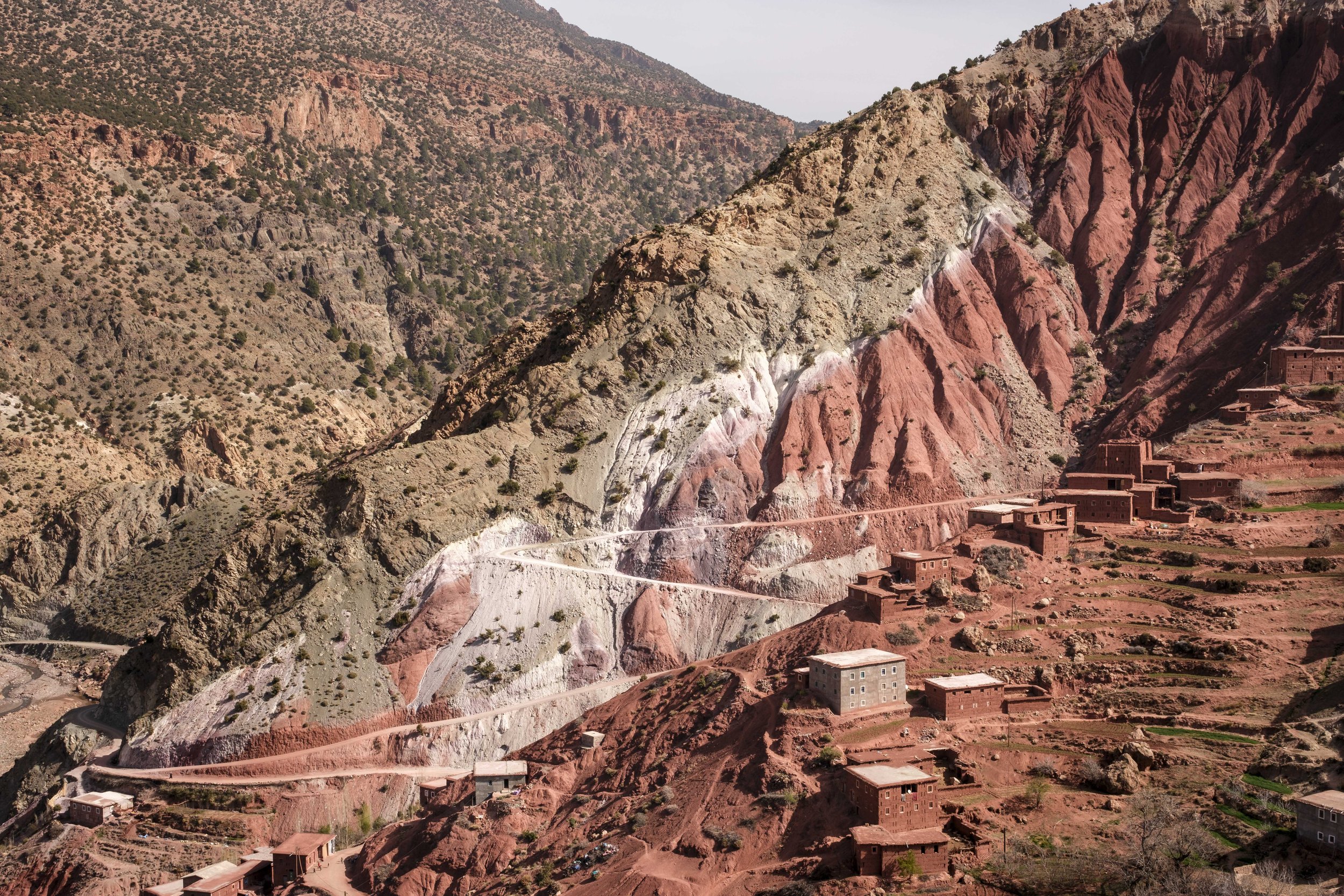
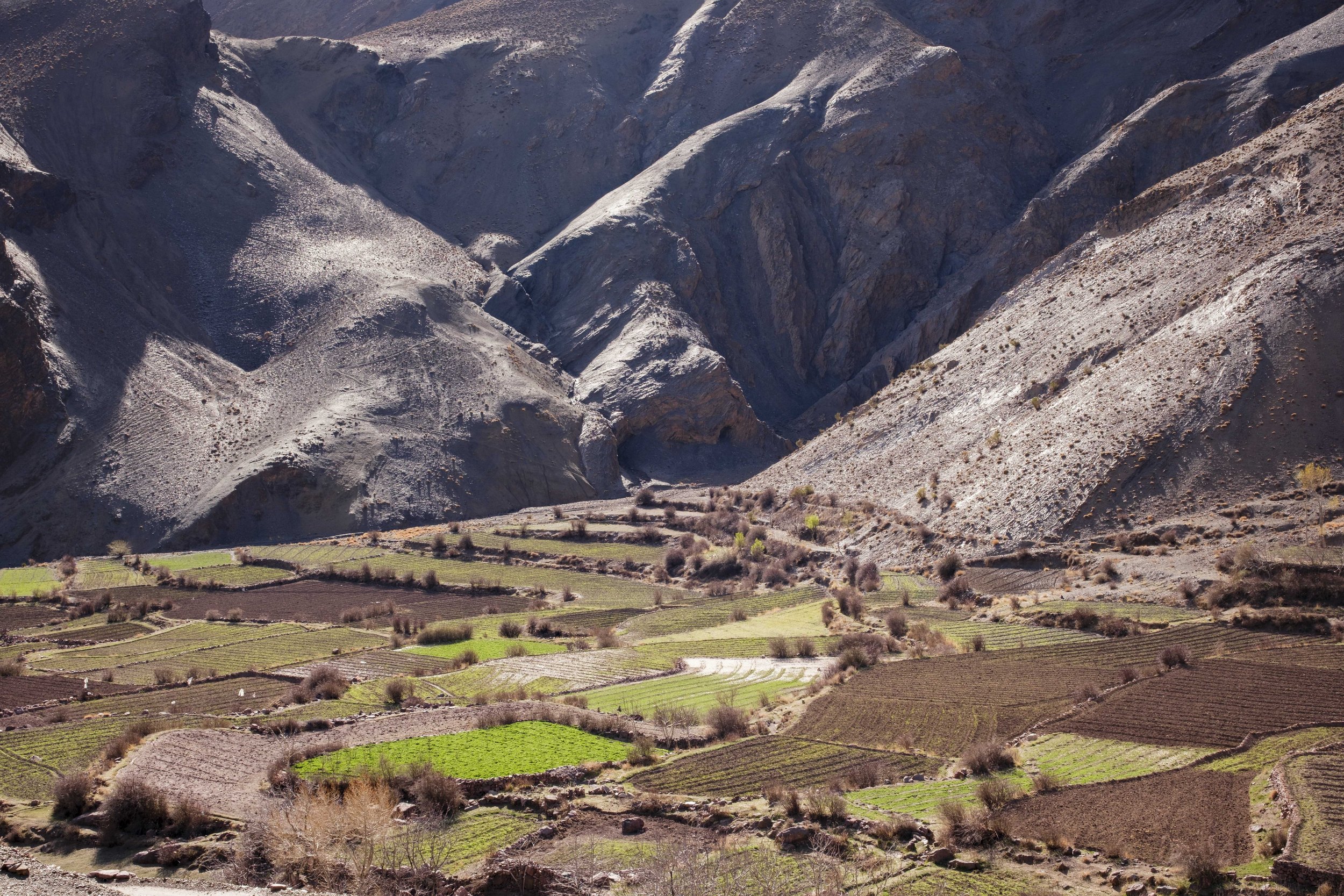
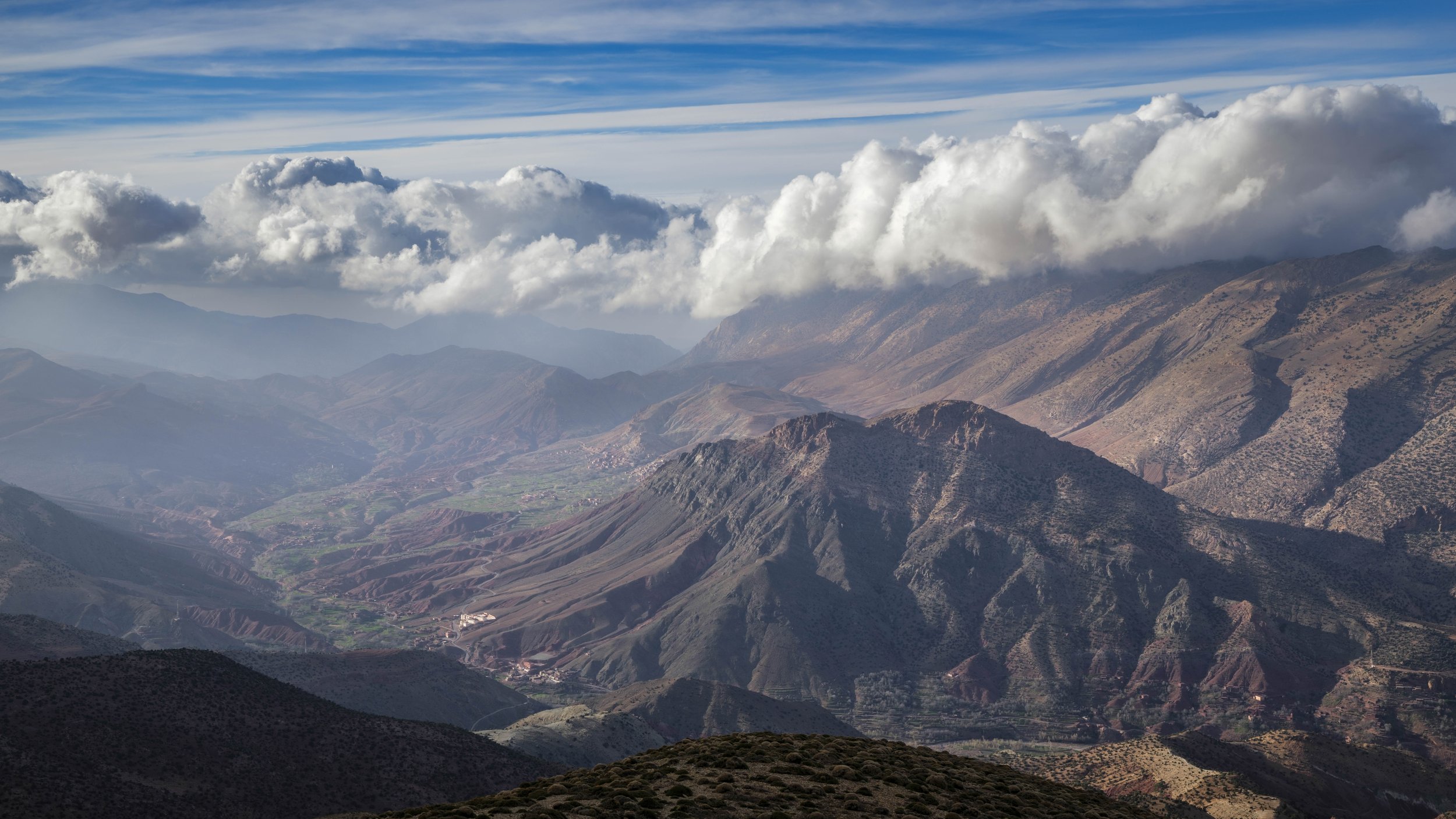
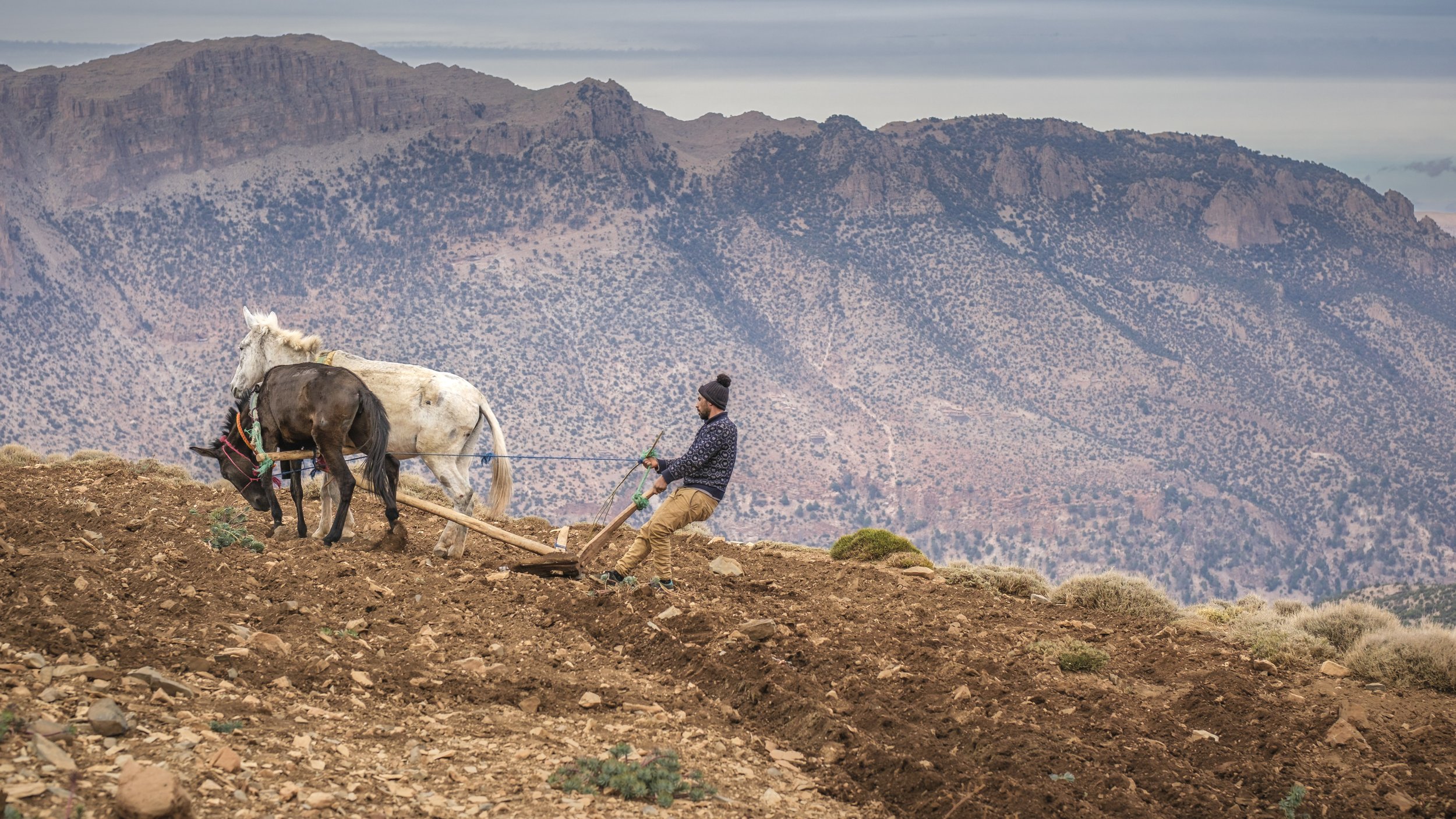
Ait Bouguemez presented a visual puzzle. Every fertile inch of the valley floor was cultivated — mostly apple orchards — laid out in a maze of low stone walls and irrigation channels. Visiting in February meant the land was largely stripped of color, leaving photographs defined by shape, line, and texture rather than abundance. Rising abruptly from the valley floor were walls of arid rock, painted naturally in reds, oranges, and tans, eroded into forms that felt both harsh and precise. These walls cast long, dramatic shadows across the valley floor, shifting throughout the day and adding depth and contrast to the landscape.
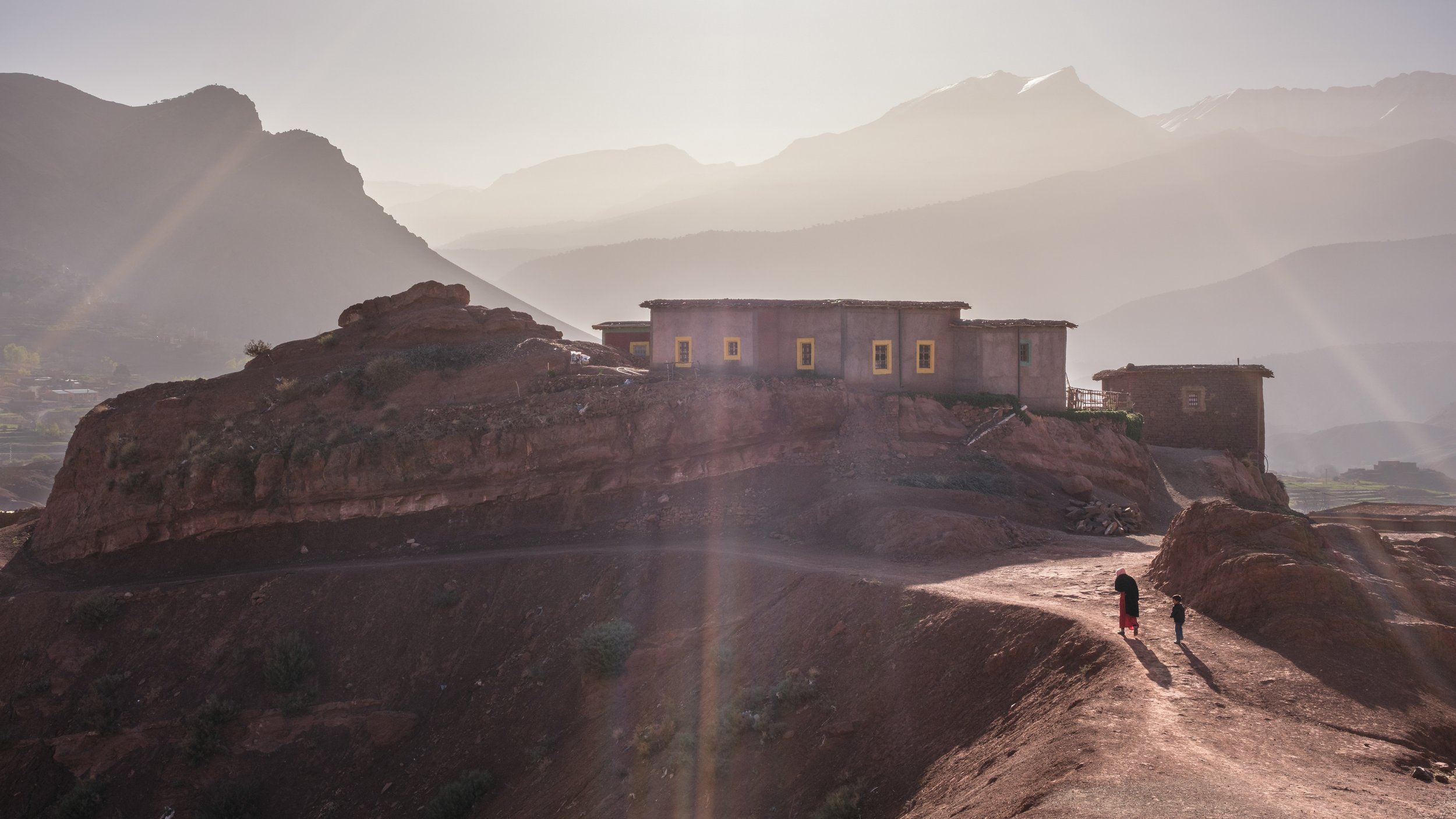
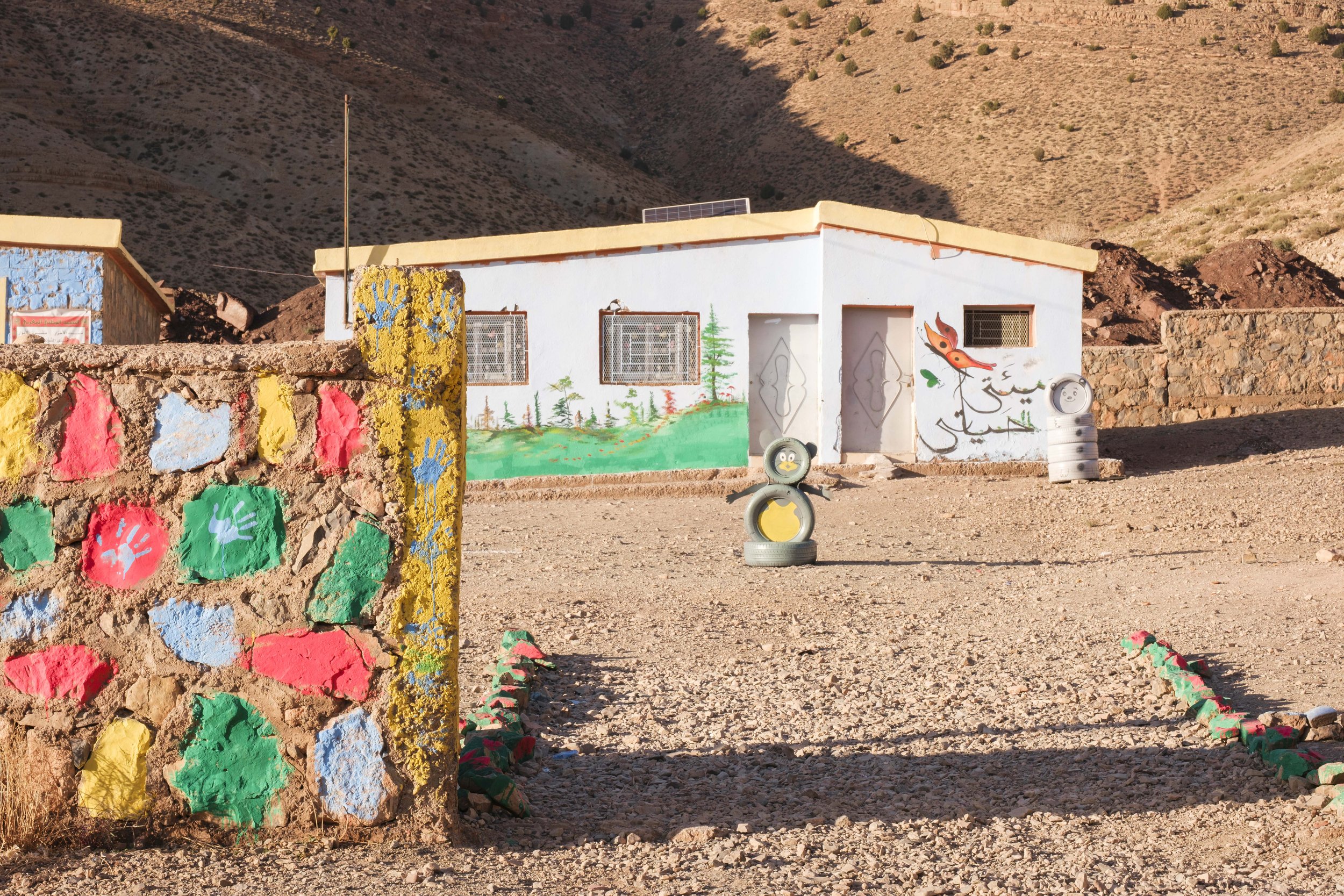
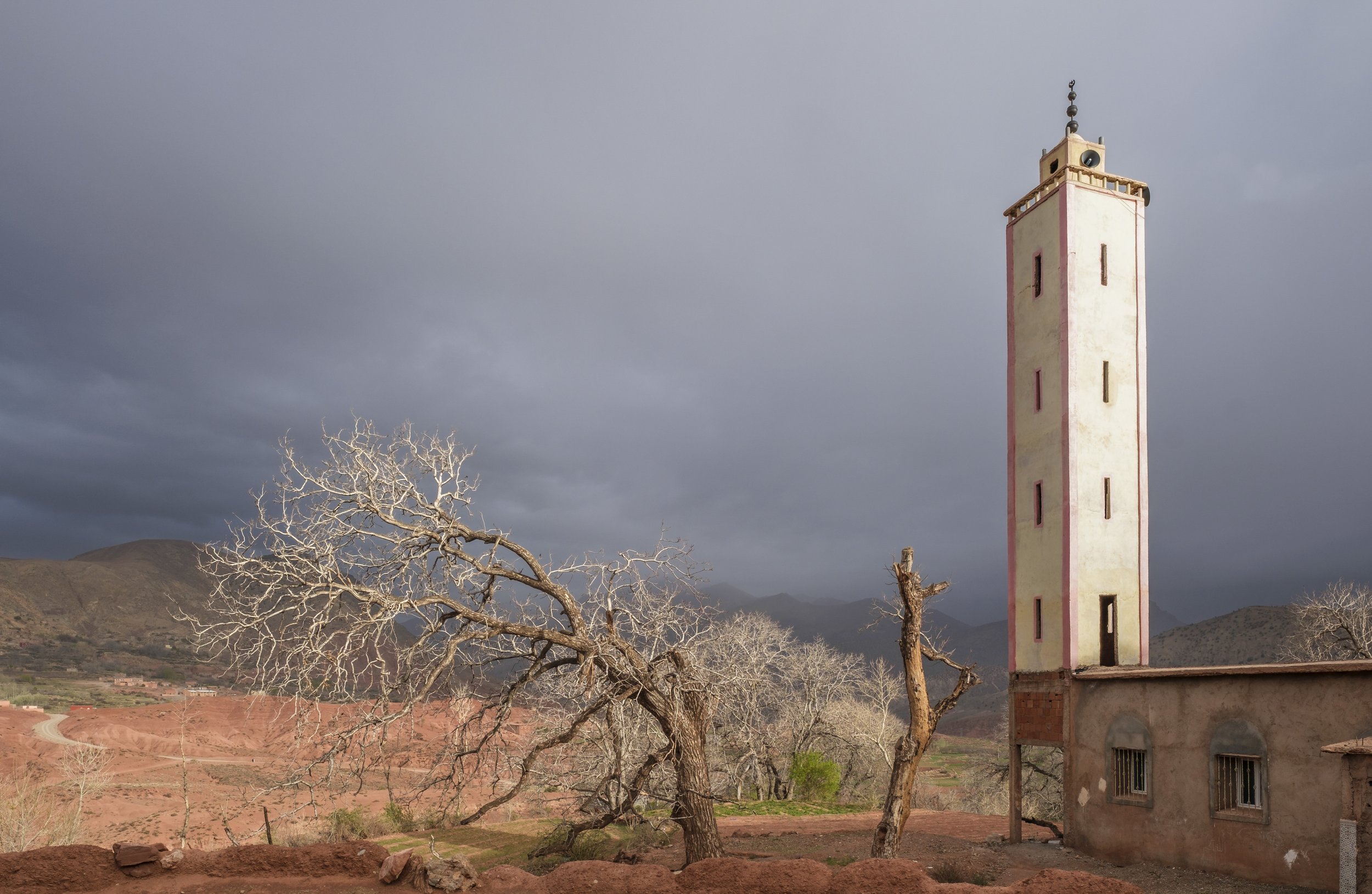
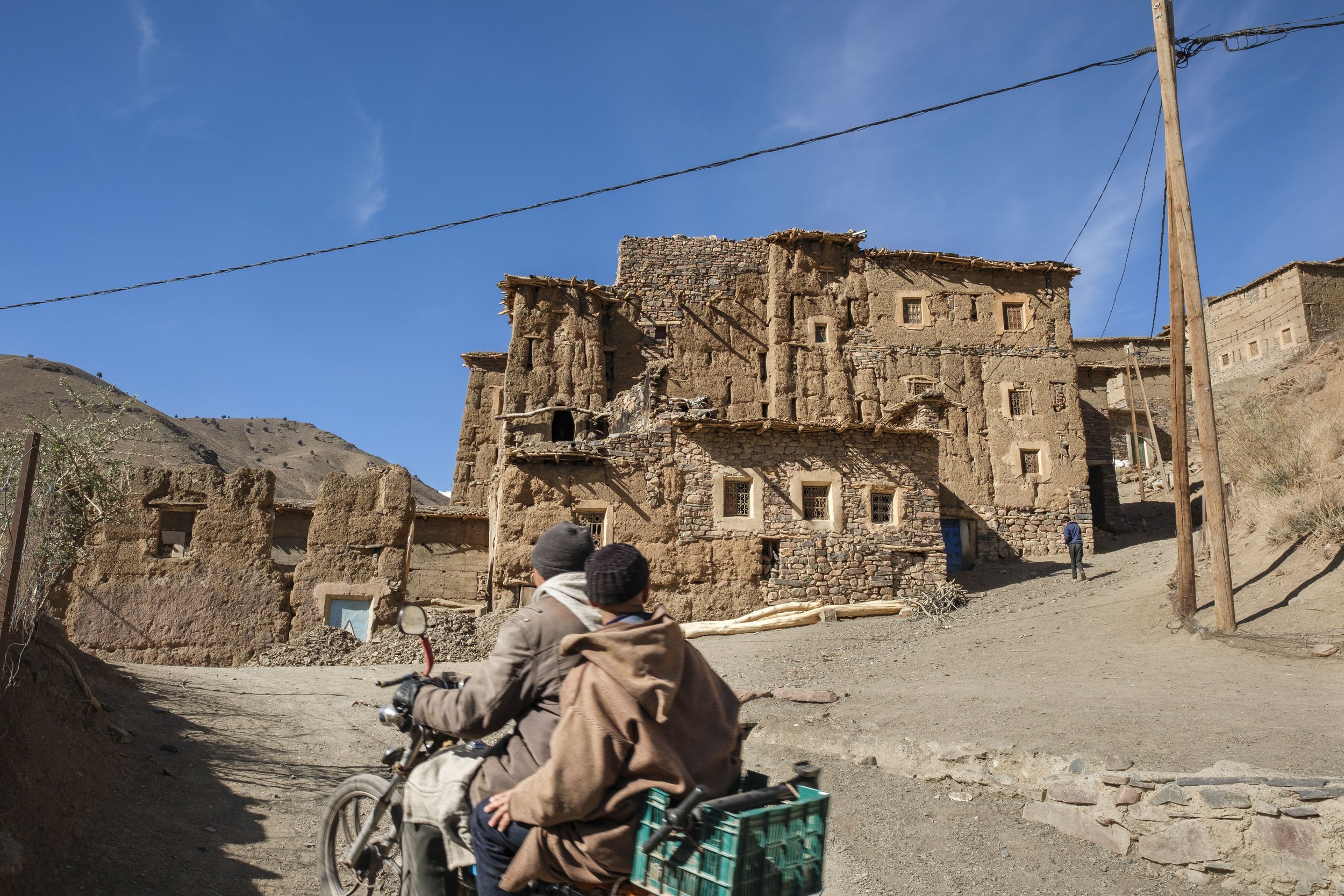
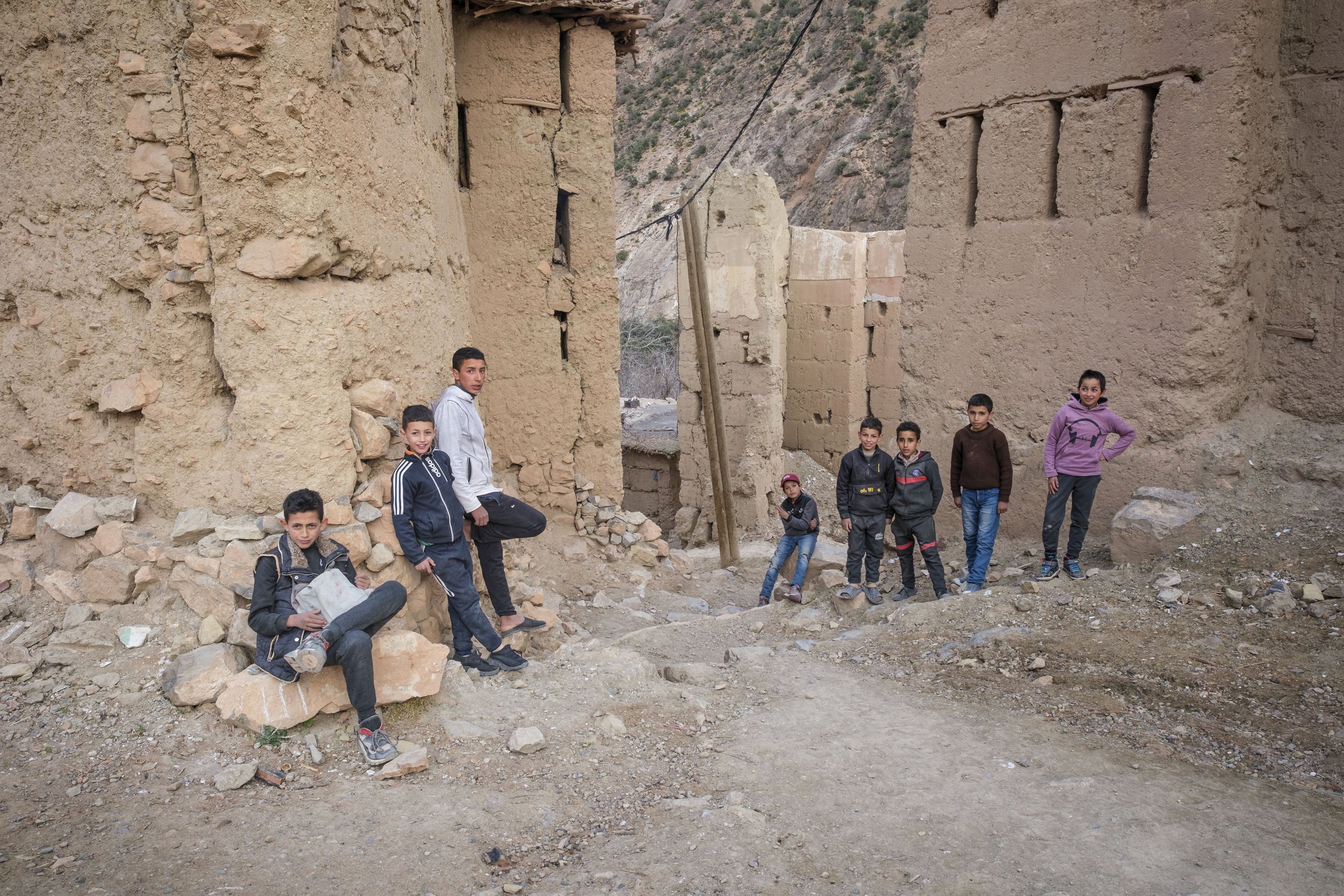
The villages themselves blended almost seamlessly into the surrounding stone. Built from the same earth they stood upon, the houses revealed themselves only through small details — a painted door, a window frame, the sound of children playing. The brightest colors in the valley belonged to the schools, each painted vividly, adding moments of playfulness and energy to the otherwise muted tones of daily life.
Walking for hours each day through this landscape was both grounding and overwhelming. Conversations with Essaid and Ali often dissolved into simple expressions of amazement, words falling away as attention took over. Photographically, the valley offered more than I had imagined, but what stayed with me was how naturally beauty, ruggedness, and a stripped-down way of life coexisted without pretense.
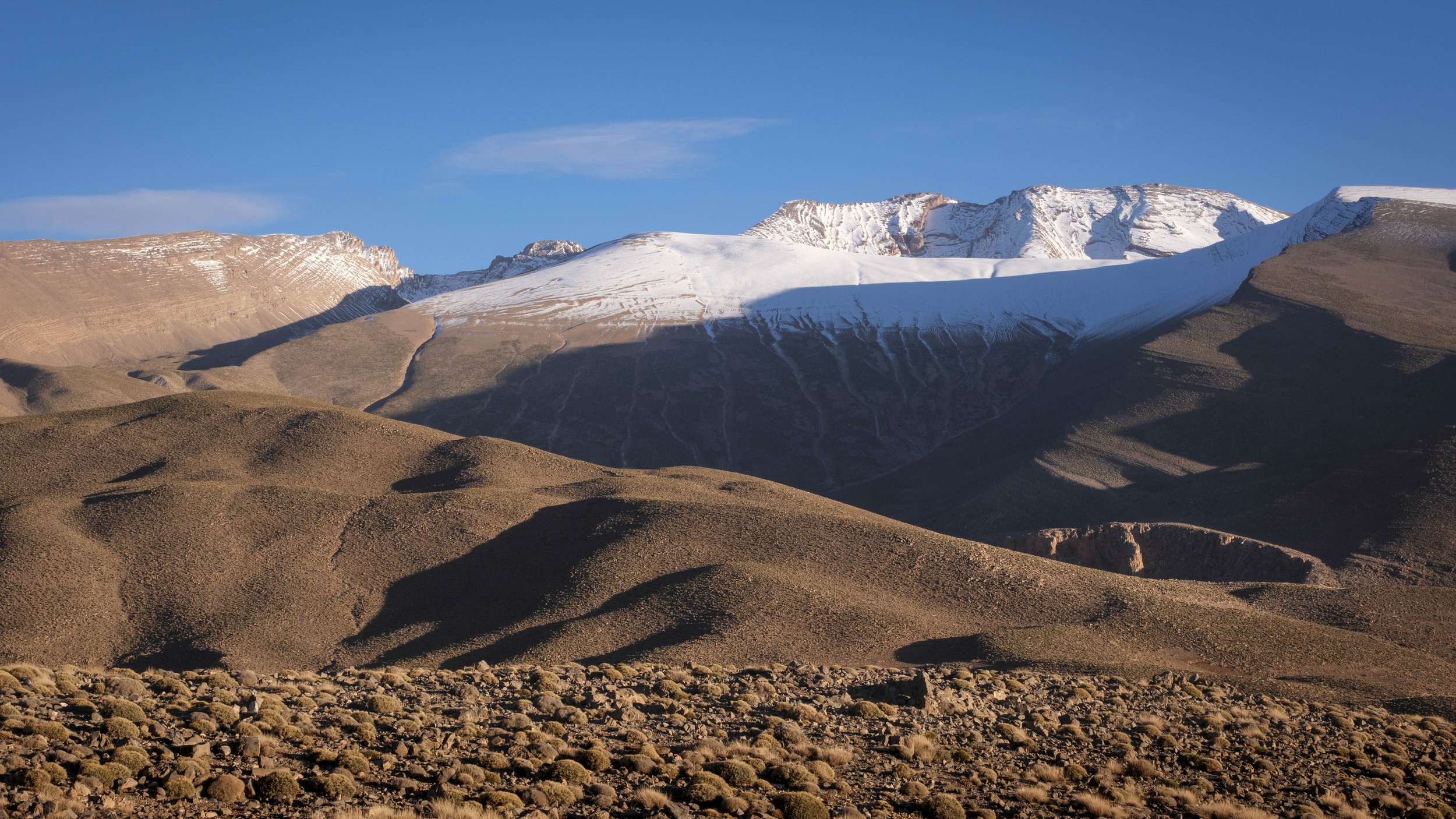
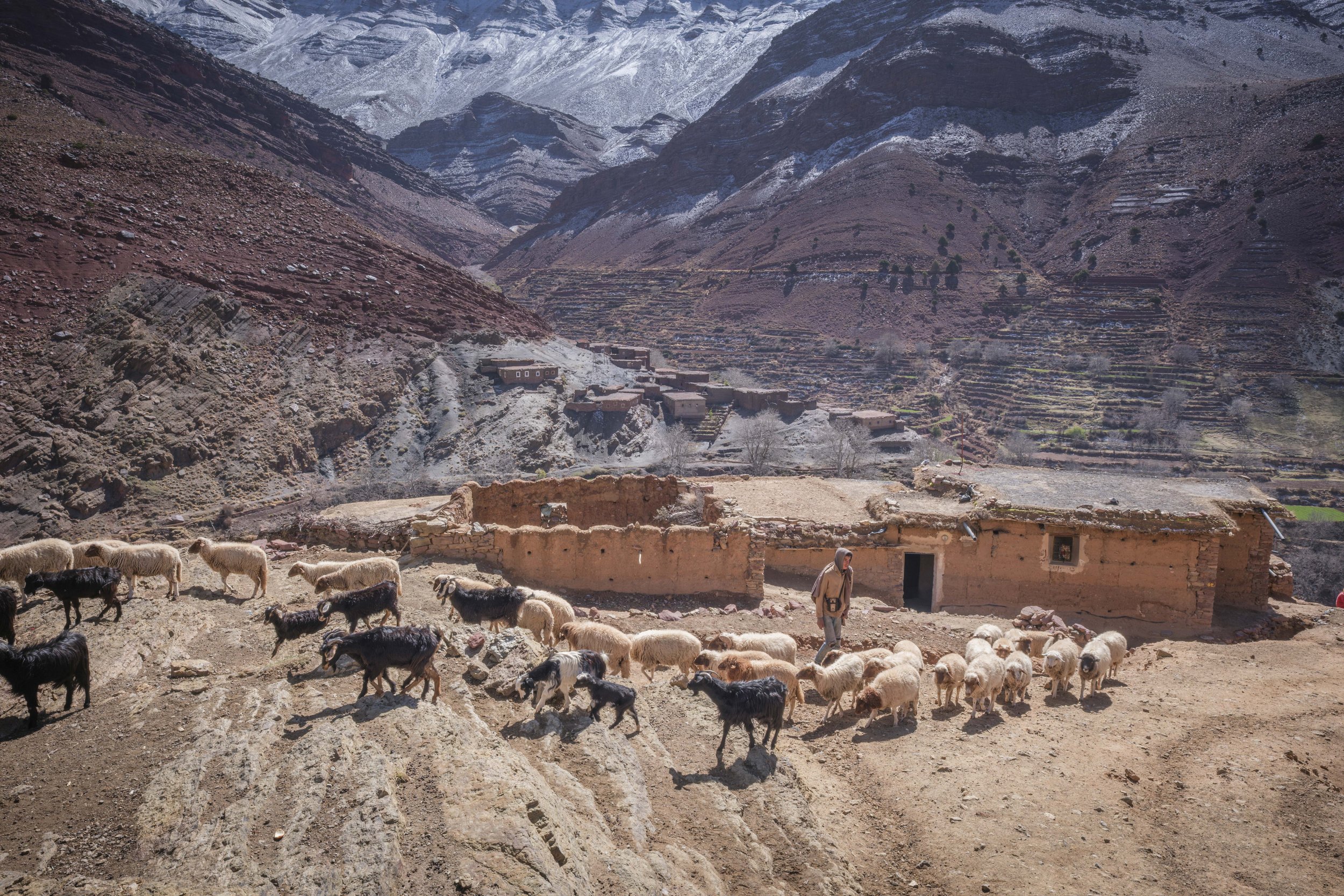
Crossing from Ait Bouguemez into Ait Boulli brought another shift. The land narrowed, terraces climbed far up the steep slopes until there was no more soil, and snow-capped peaks began to dominate the horizon. Jbel Rat (3,781 meters) remained in view from nearly every angle, anchoring the valley visually and emotionally. The two arms of Ait Boulli revealed distinct character: Ait Mallal to the south in muted shades of brown, Ait Mzalt to the north in deeper reds, both interspersed with patches of green as early crops began to emerge on the terraces.
Despite the changing scenery, the rhythm remained constant. We walked, met people, shared tea in orchards, and slept in homes where hospitality felt instinctive rather than performative. Roads had connected these valleys to the outside world less than twenty-five years ago, but mass tourism had not followed. Most visitors stayed near the heart of Ait Bouguemez, rarely venturing farther.
That distance—both geographical and cultural—seemed to preserve something essential.
This trek gave me everything I value in a mountain walk: sustained effort, solitude, camaraderie, and remarkable landscapes. But it also gave me something I hadn’t fully anticipated — an unfiltered cultural experience grounded not in observation, but in participation, even if only for sixteen days. I was not passing through empty spaces between dramatic viewpoints; I was moving through lives already in motion.
Any skepticism I carried into this journey faded quickly. Walking through Ait Bouguemez and Ait Boulli reshaped my understanding of what trekking means to me. It was different from my other mountain experiences — quieter, lower, more intimate — but no less remarkable.
The power of this place lay not in altitude or extremity, but in the way daily life, landscape, and community were inseparable. This was not a place that asked to be measured or conquered. It simply asked to be walked through slowly, with attention.
And that, I came to understand, is one of the most rewarding kinds of journeys I can make.
Ait Bouguemez Trek – Image Gallery ⟩