My First Himalayan Journey
Toward Everest’s North Face
Story by Steve Fagan
In September 2005, I traveled to Tibet for my first journey into the Himalayas.
This was not my introduction to mountains. I had known them since my teenage years in Alberta, Canada, where the Rocky Mountains first taught me about scale, solitude, and humility. Mountains had already become places I returned to — places that shaped how I saw the world.
But the Himalayas were different.
For years, they existed in my imagination as something distant and almost mythical — immense, beautiful, and somehow inaccessible. And within them stood Mount Everest. Not simply the highest mountain on Earth, but a presence that felt larger than geography. From photographs and stories, especially of its north face in Tibet, Everest seemed less like a destination and more like an idea.
In 2005, that idea became real.
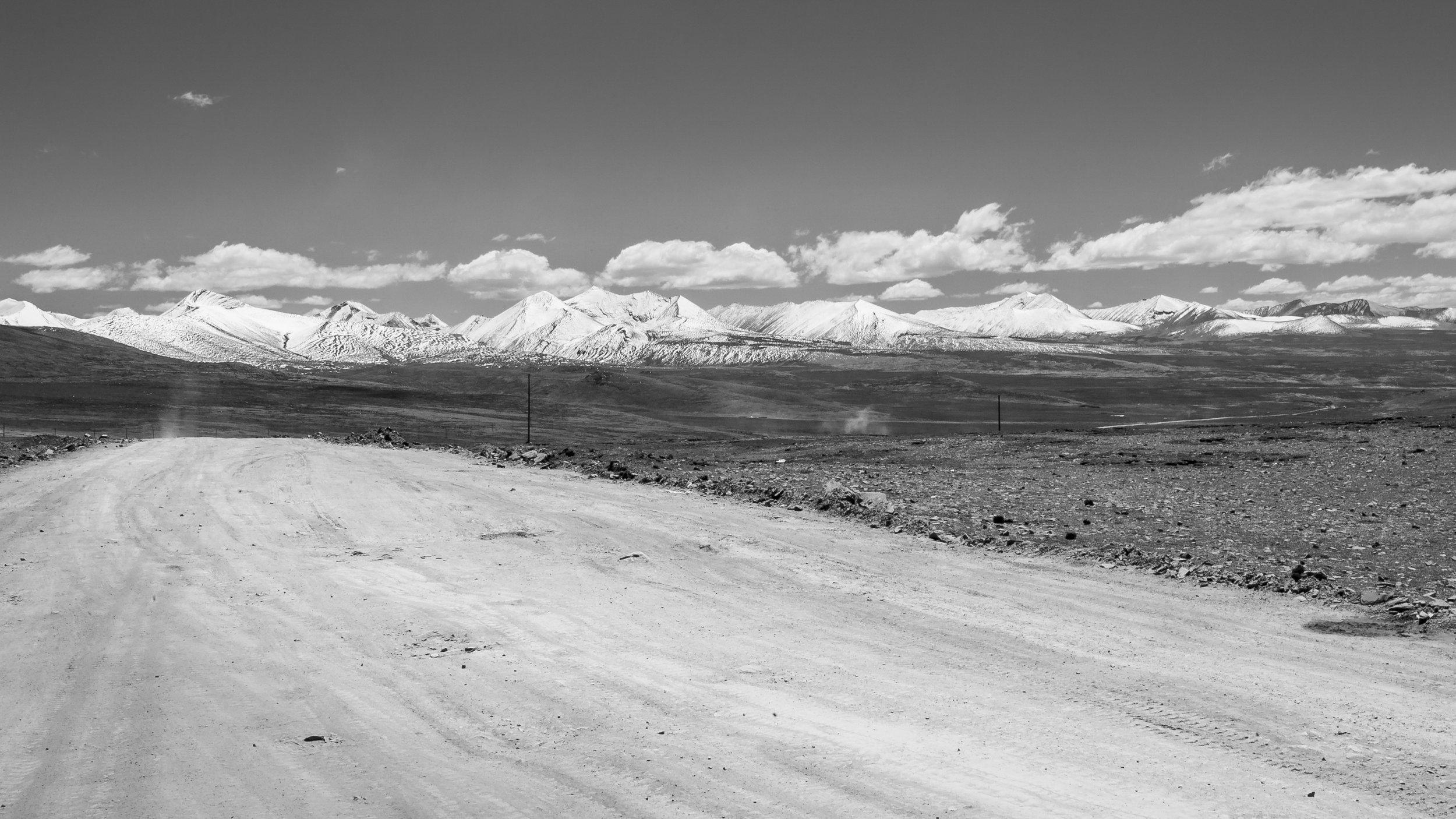
After leaving Shigatse, we drove west across the Tibetan Plateau toward Tingri, beginning a journey that would soon be completed on foot. The road was long and punishing — hours of broken surface, construction zones, delays, and constant obstacles. Progress was slow. Fatigue accumulated. But as the land opened and the air thinned, familiar reference points quietly disappeared.
The Tibetan Plateau announces itself gradually. Villages thin out. Horizons stretch. Time feels altered. Even before the great peaks appear, there is a sense that you have crossed into a place governed by a different scale, one that asks for patience, attention, and humility.
From Tingri, the plan was clear: walk south through open valleys and high passes toward the East Rongbuk Glacier on the north side of Mount Everest. No summit attempt. No fixed objective beyond walking into the Himalayas and seeing how far the body, and the mind, would go.
I was traveling with a small Tibetan team: a guide, a driver, and a cook; Tsering, Tashi and Purbu — men whose lives were shaped by this region in ways I could not yet fully understand. Communication was limited. The pace was unhurried.
From the outset, the journey felt less like travel and more like an initiation.
We reached Old Tingri in the early evening. I stepped out of the vehicle and looked south.
The fatigue vanished.
The Himalayas stood there in silence.
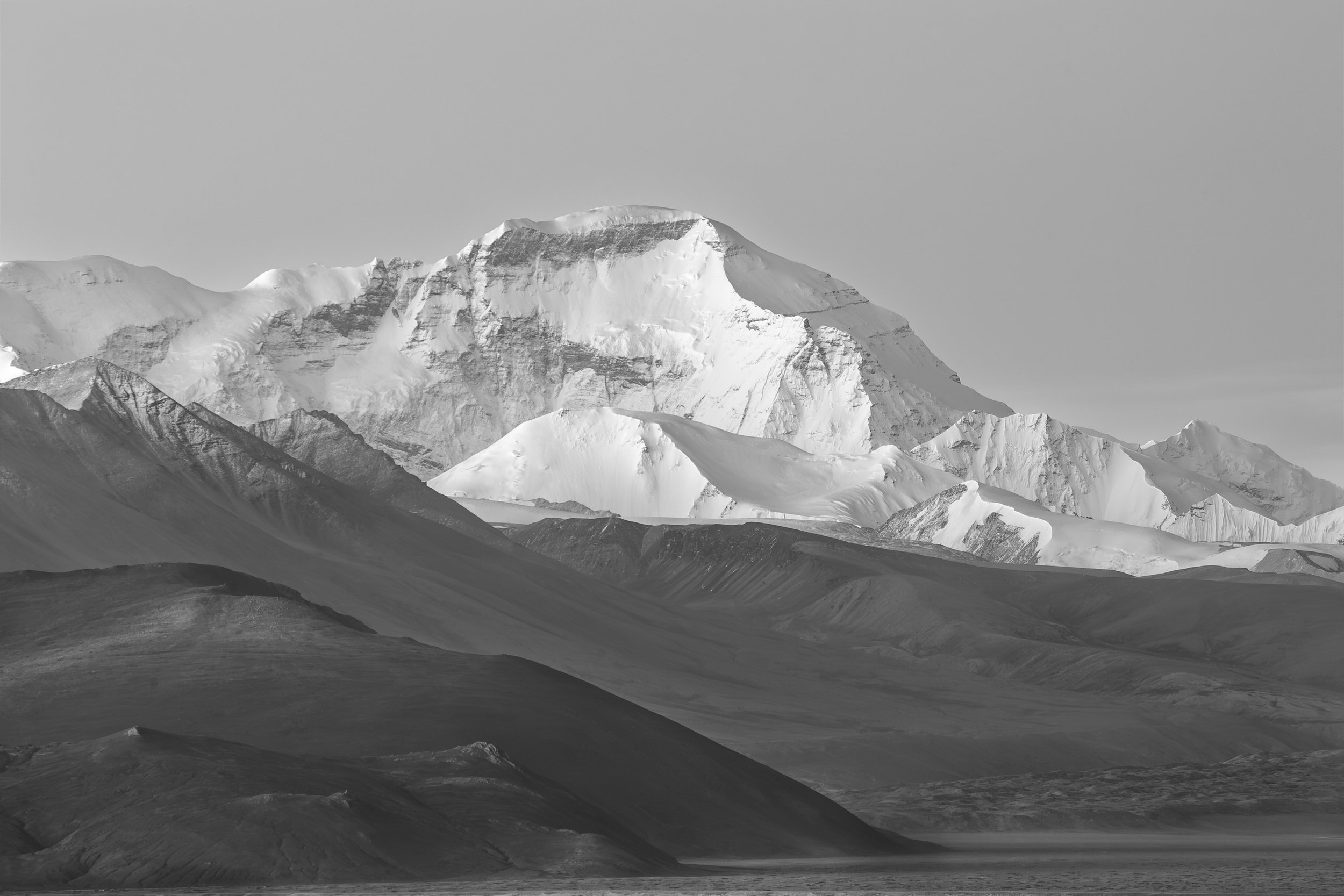
Our camp was high on the plateau, yet everything around us continued to rise. Under a deep blue sky, massive snow-covered peaks stretched across the horizon. Cho Oyu dominated the view, broad and imposing at roughly 8,188 metres, the sixth-highest mountain in the world. Behind the rolling foothills rose layer upon layer of immense terrain, already higher than most mountains I had known.
Farther east, a single cloud sat perfectly placed, obscuring Chomolungma — Mount Everest. Its absence was almost as powerful as its presence. I knew it was there, hidden just beyond sight, and that knowledge alone carried weight.
This was the starting point. Tomorrow, I would begin walking.
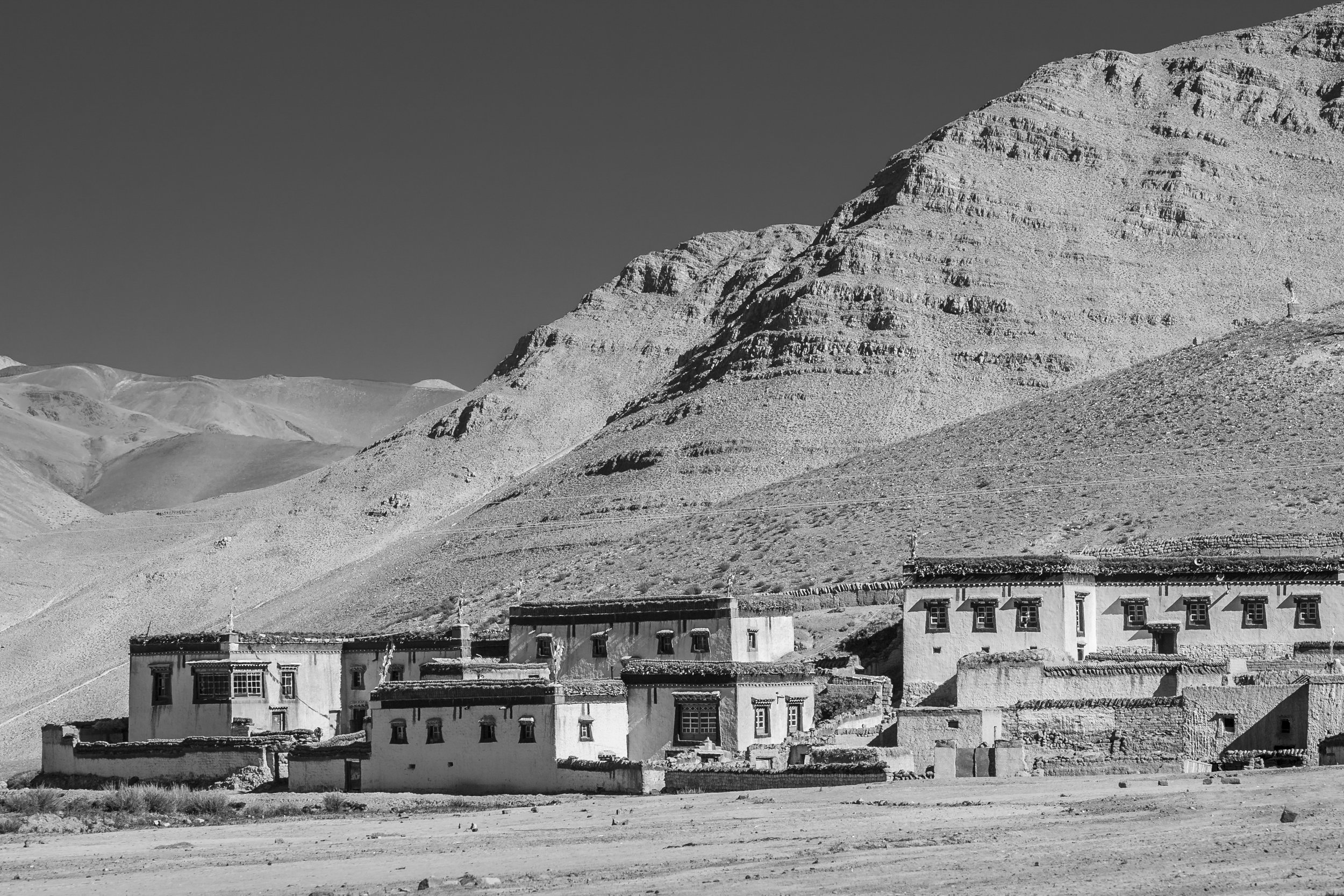
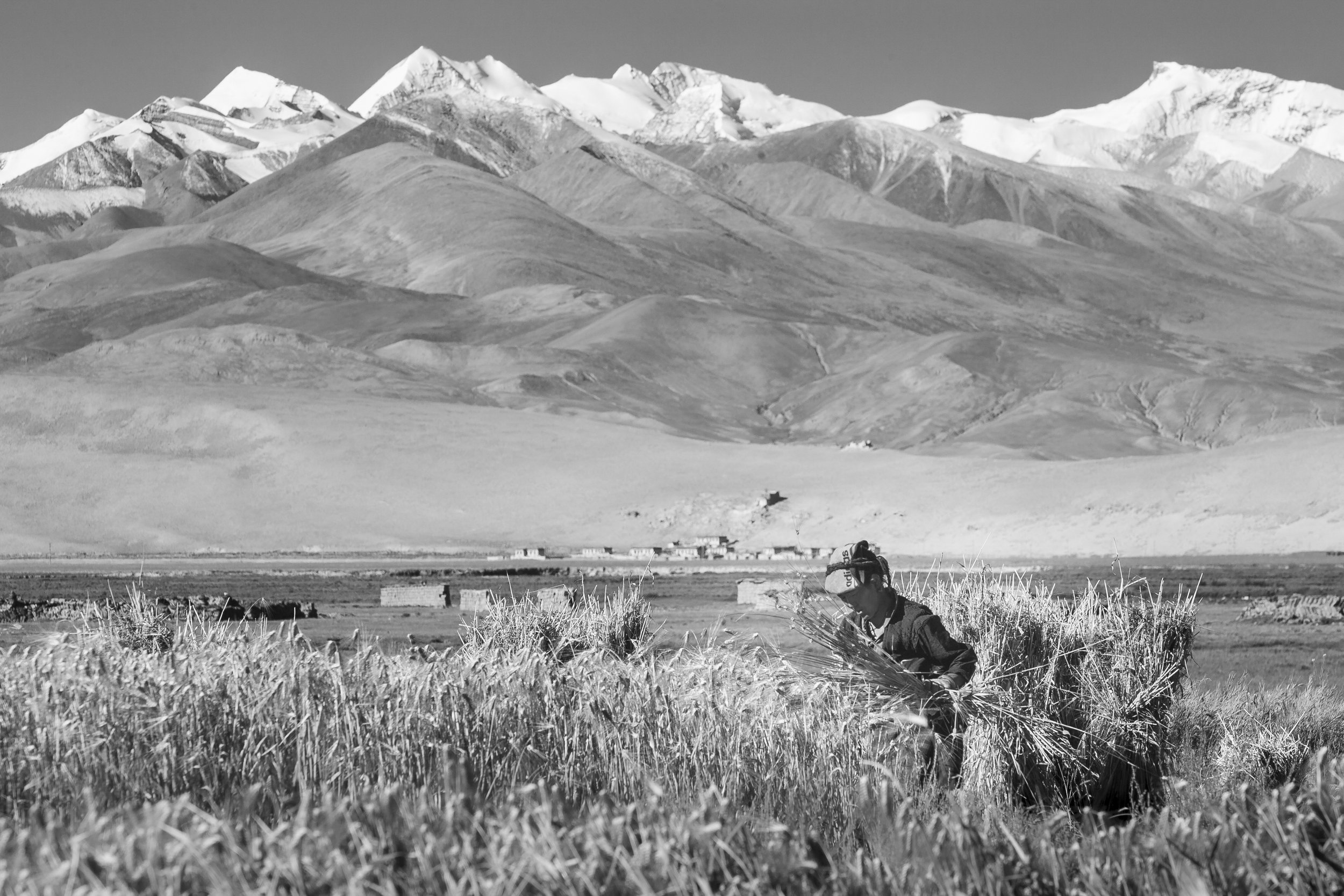
The trek from Old Tingri led south through wide valleys and farming villages, where it seemed all families were harvesting barley. Golden fields glistened in the morning light, set against an impossible mountain backdrop. Men, women, and children, some as young as six, worked together, cutting and stacking barley with sickles. There were no machines, no shortcuts. Only labor, rhythm, and endurance.
The scene was beautiful — and sobering.
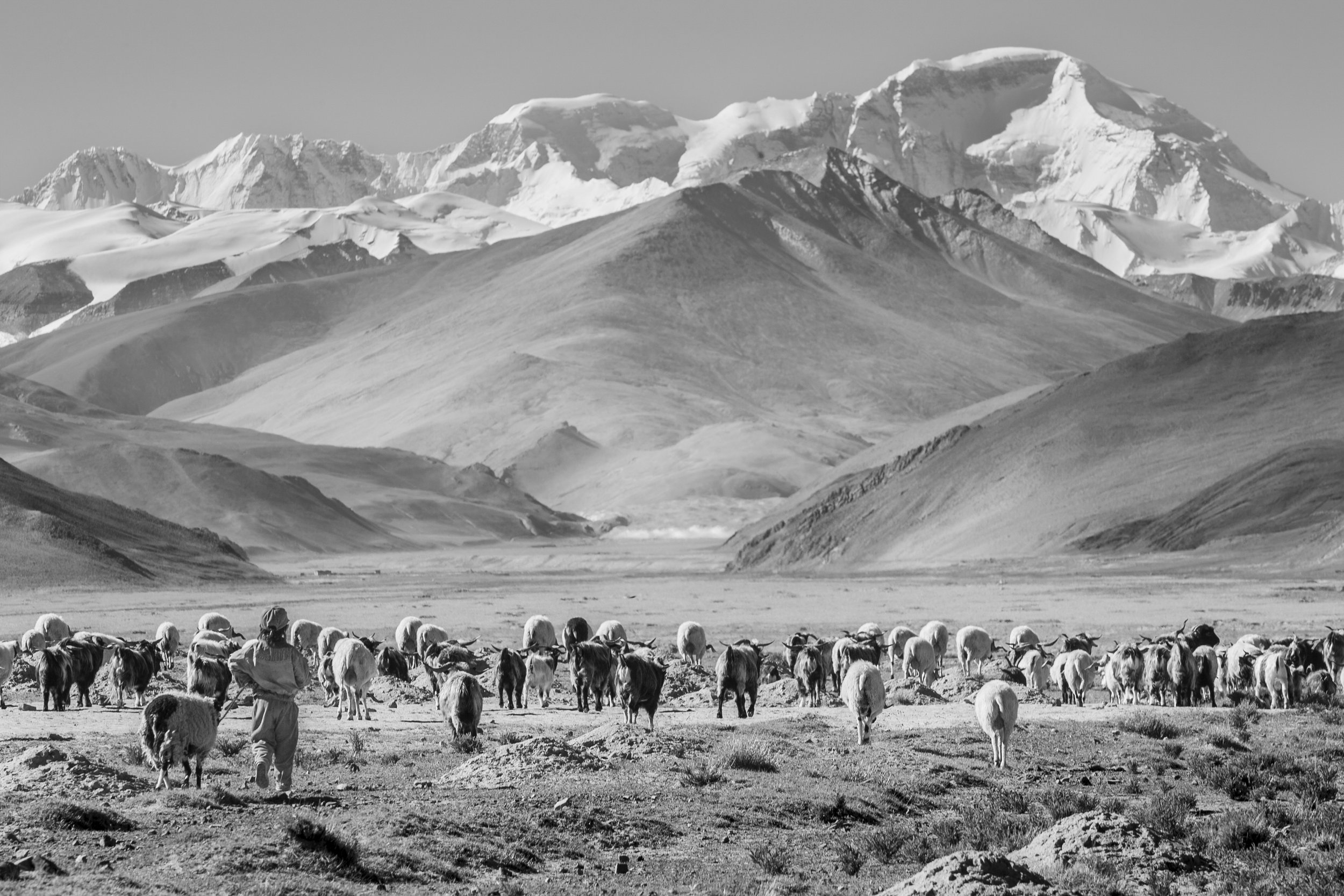
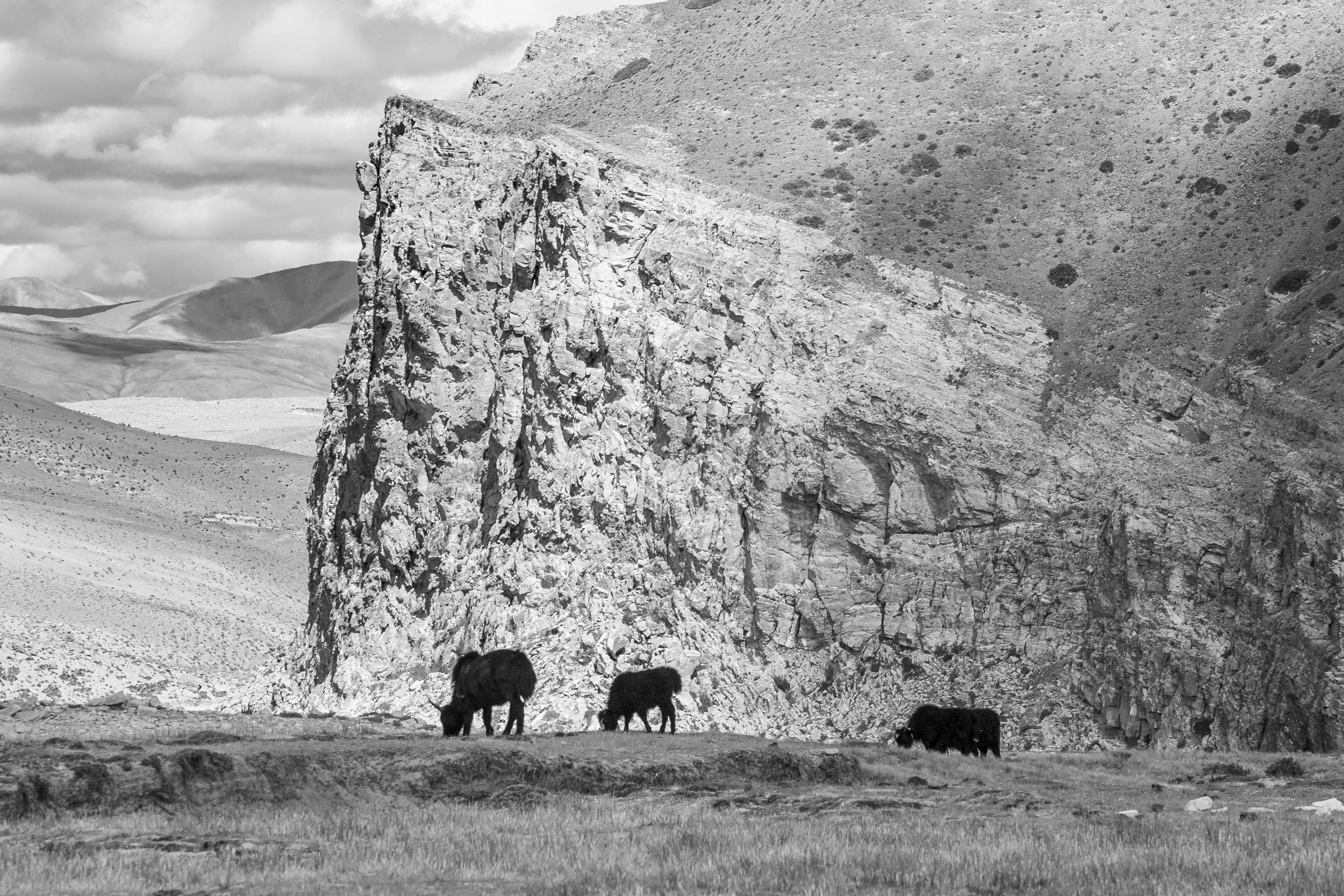
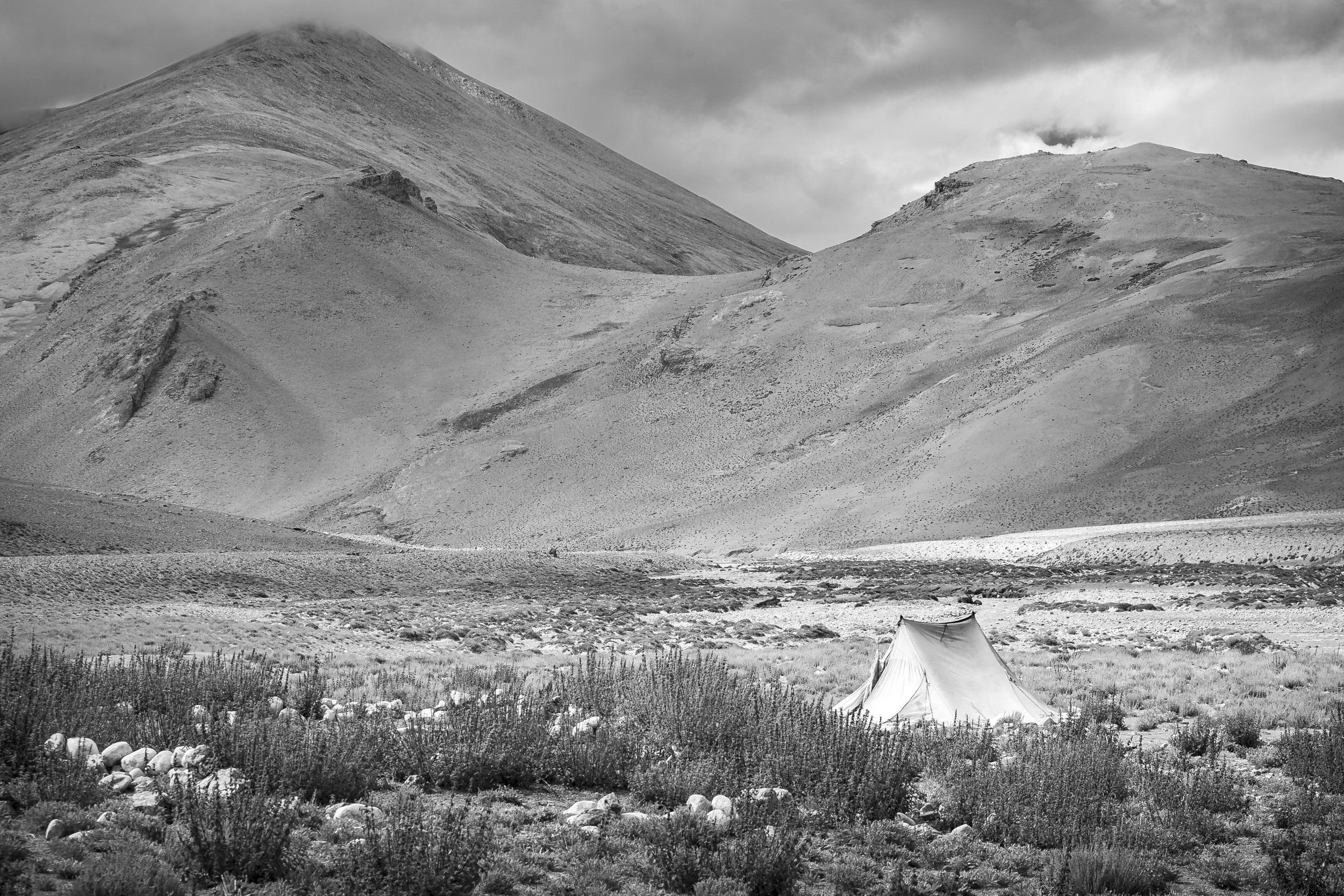
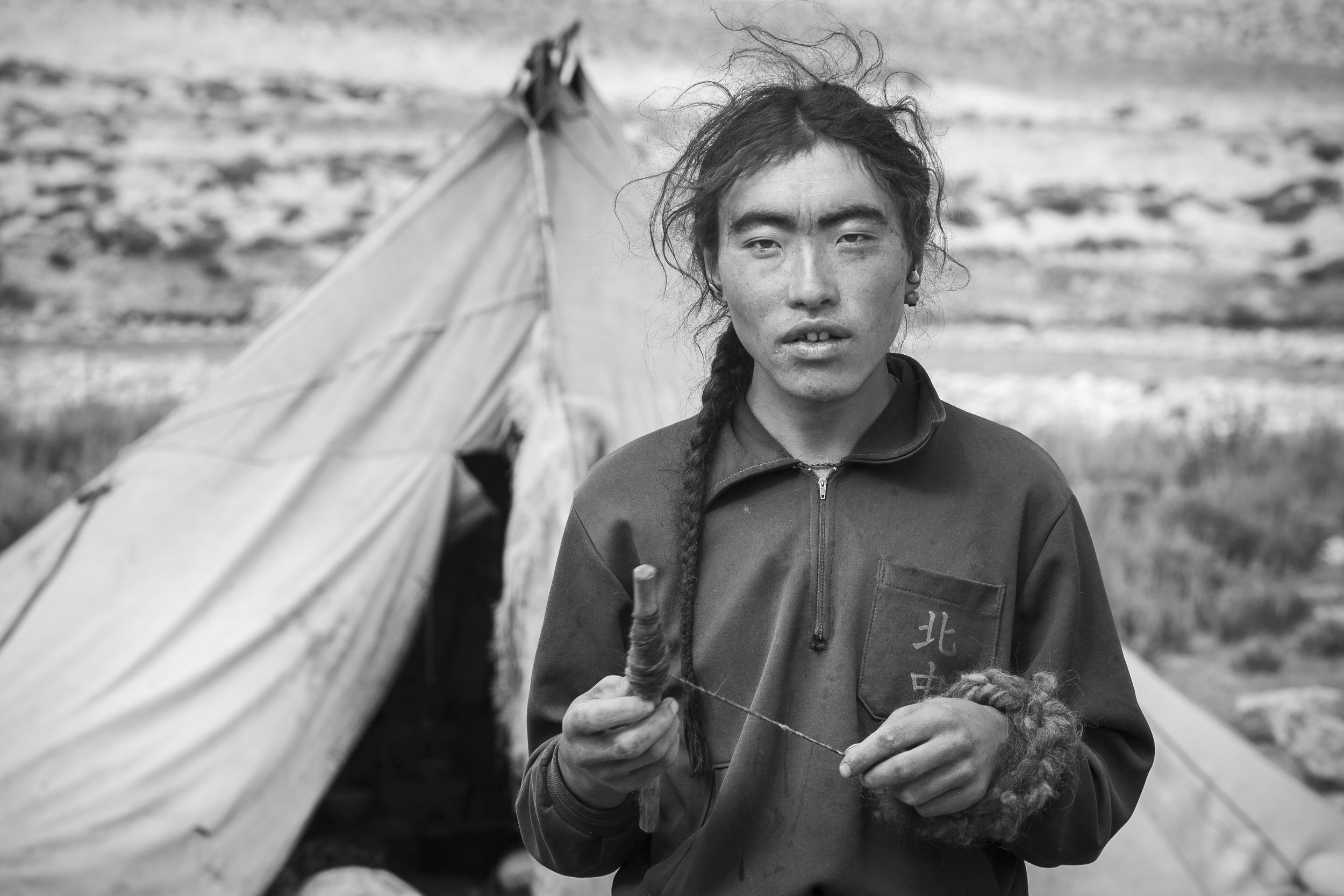
As we climbed higher, villages disappeared. Trees vanished. Farming gave way to grazing land, and eventually to nomadic life alone. Yaks dotted the landscape, some decorated with prayer flags and ornaments, blessings for animals central to survival. Nomad tents appeared, small and widely spaced, reflecting the scarcity of viable grazing at altitude.
This was a land shaped by subsistence, not accumulation.
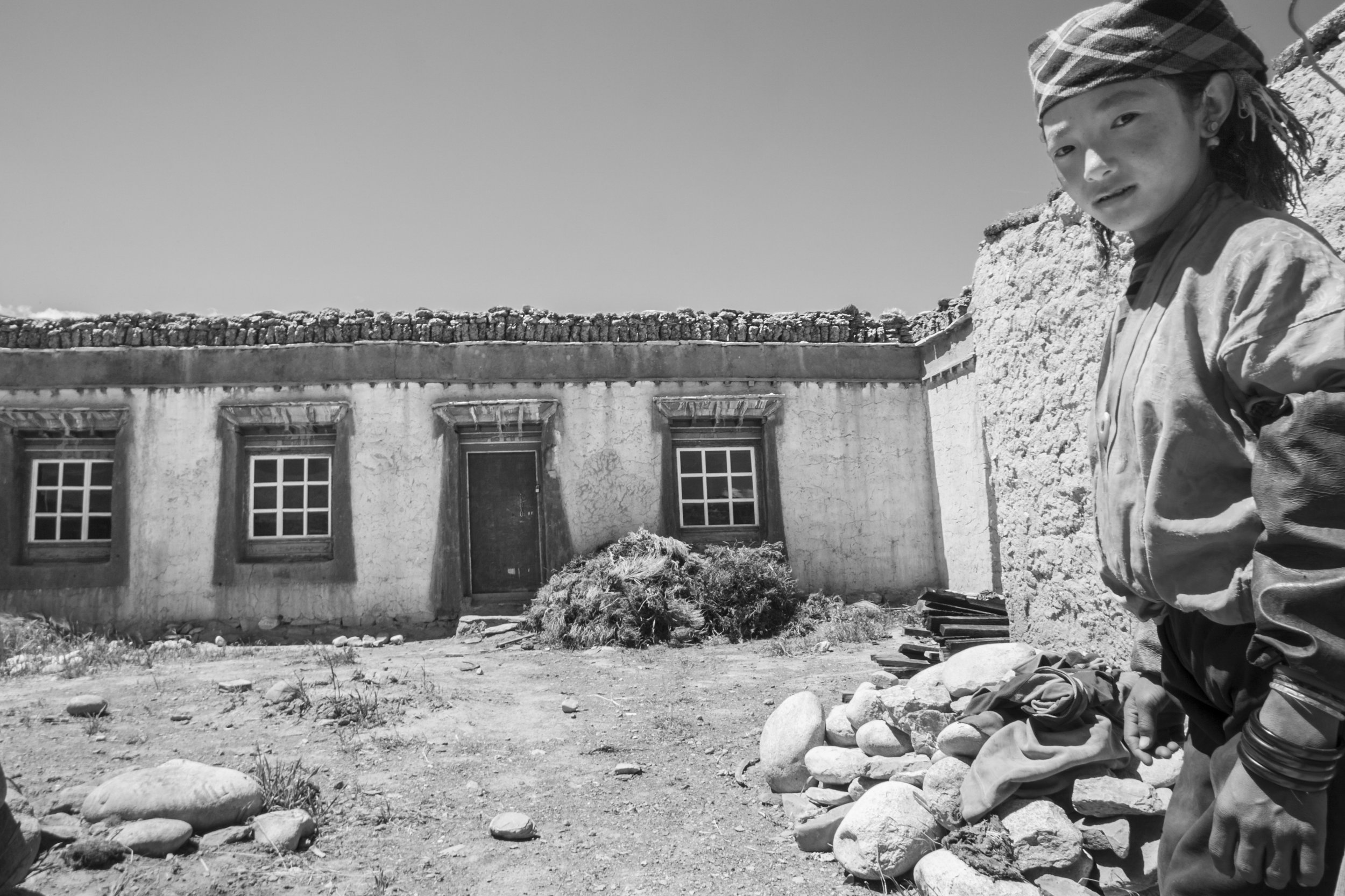
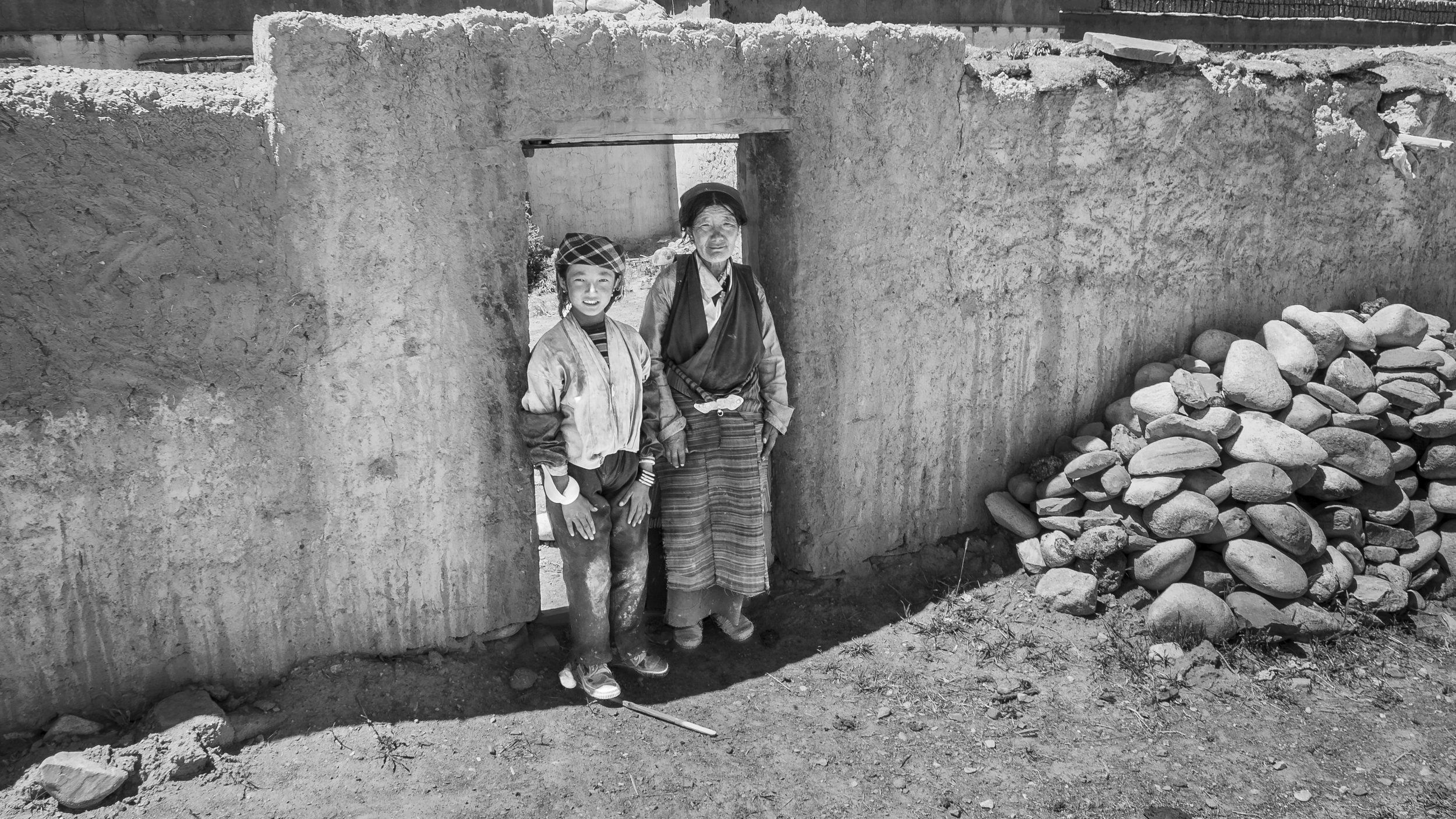
Along the way, I met people whose lives were inseparable from this environment — an elderly woman and her granddaughter living in a single-room house; young boys tending flocks, watching silently as I passed; nomads whose days were measured in weather, animals, and movement rather than time.
There were no other trekkers.
Decades earlier, the Chinese had built a road to Everest Base Camp, and since then almost everyone arrived by vehicle. Walking in from Tingri meant moving through a landscape largely emptied of outsiders. For days, it was just us — and the people who lived here.
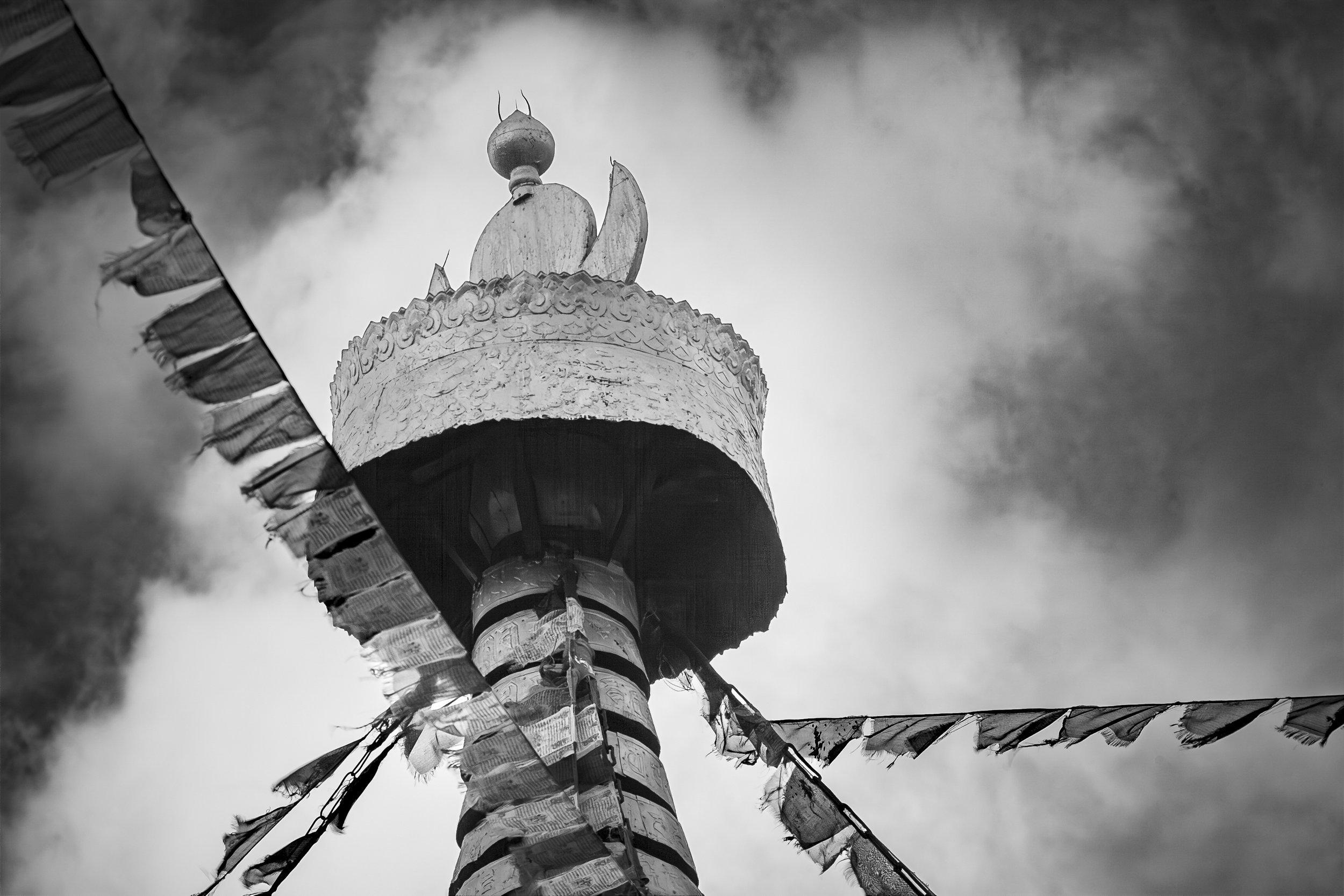
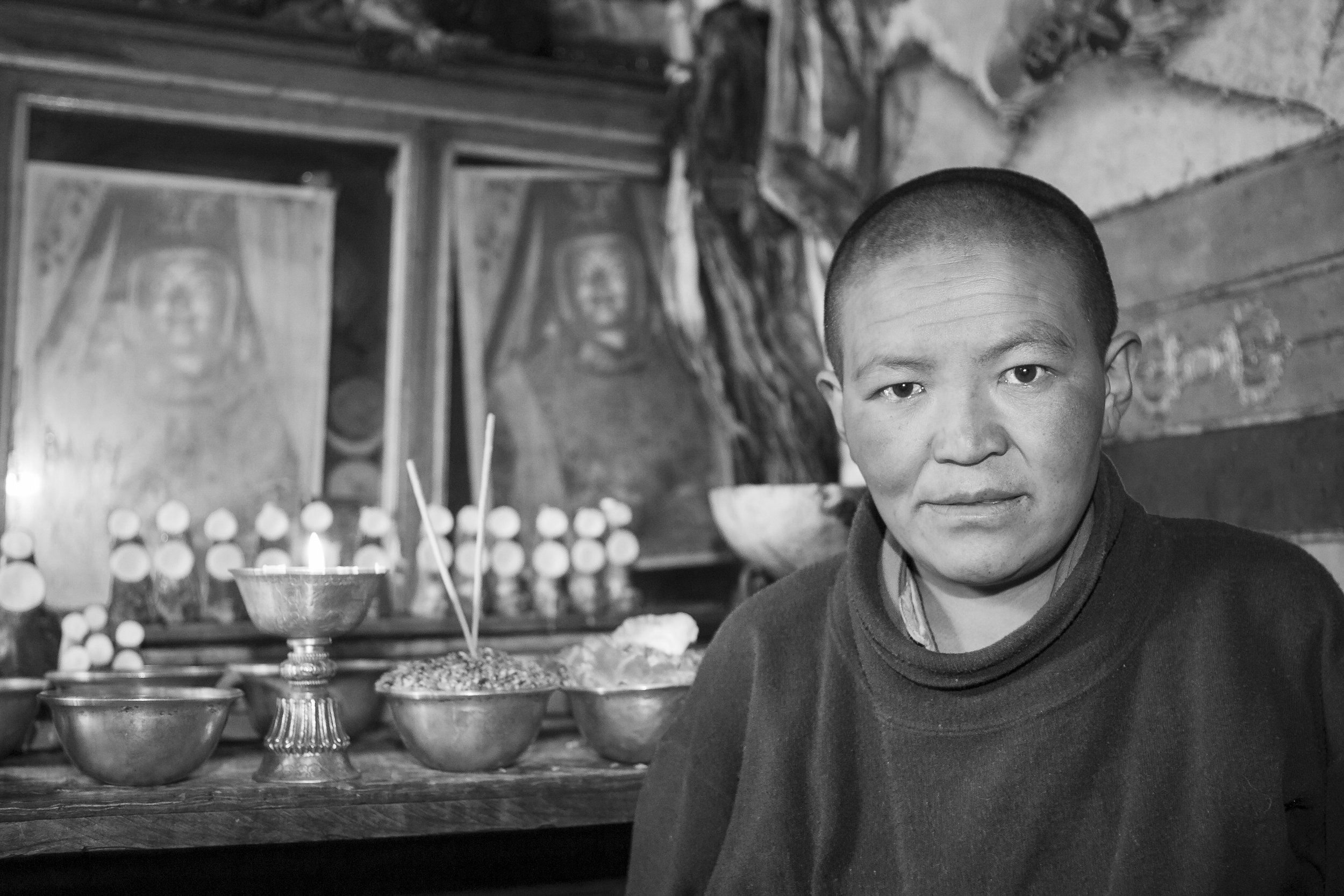
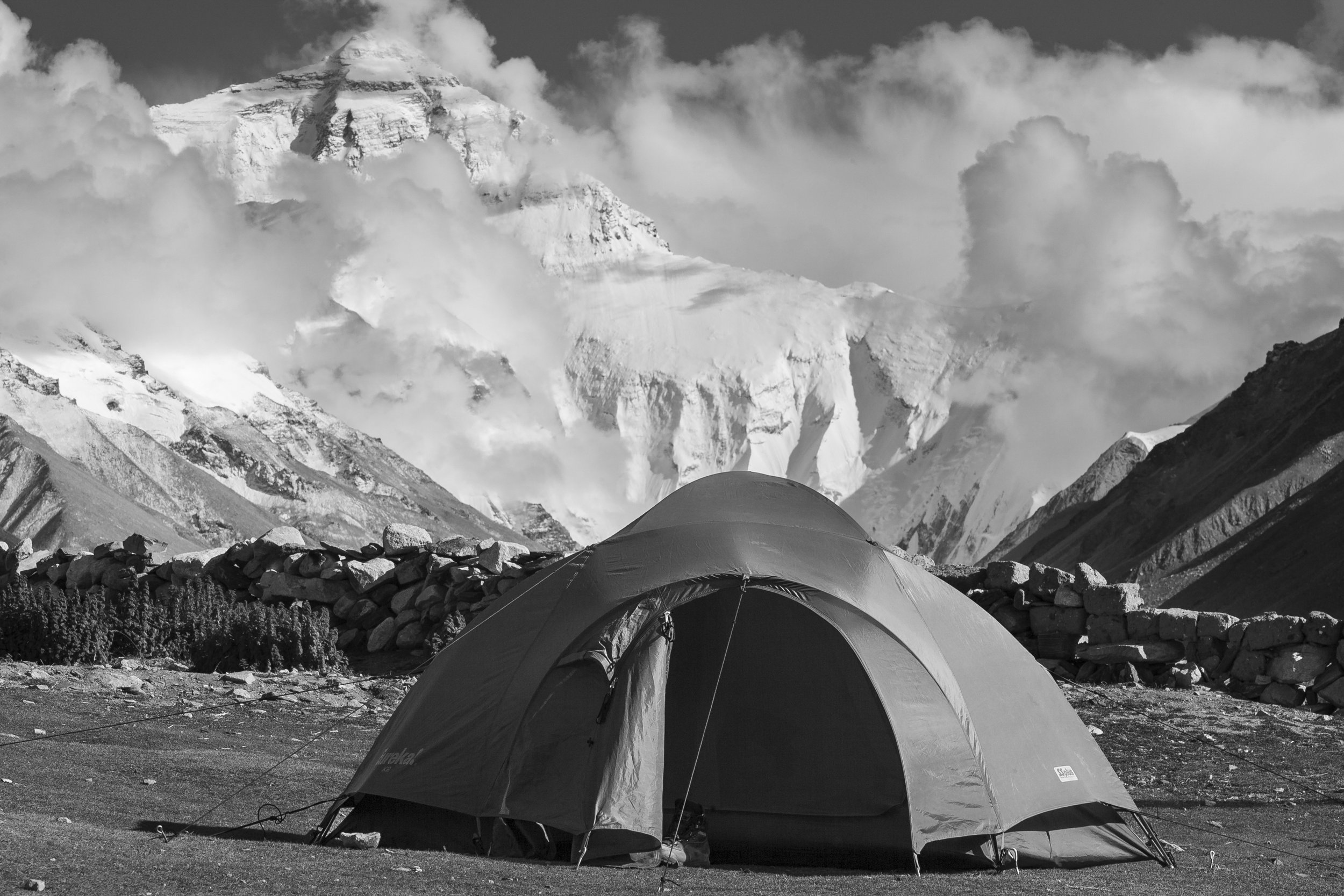
By the time we reached Rongbuk Monastery, sitting at roughly 5,000 metres, and often described as the highest monastery in the world, the sense of isolation had deepened into something quieter and more profound. With the permission of the Buddhist nuns, I pitched my tent beside the monastery.
Instinctively, my gaze was drawn south.
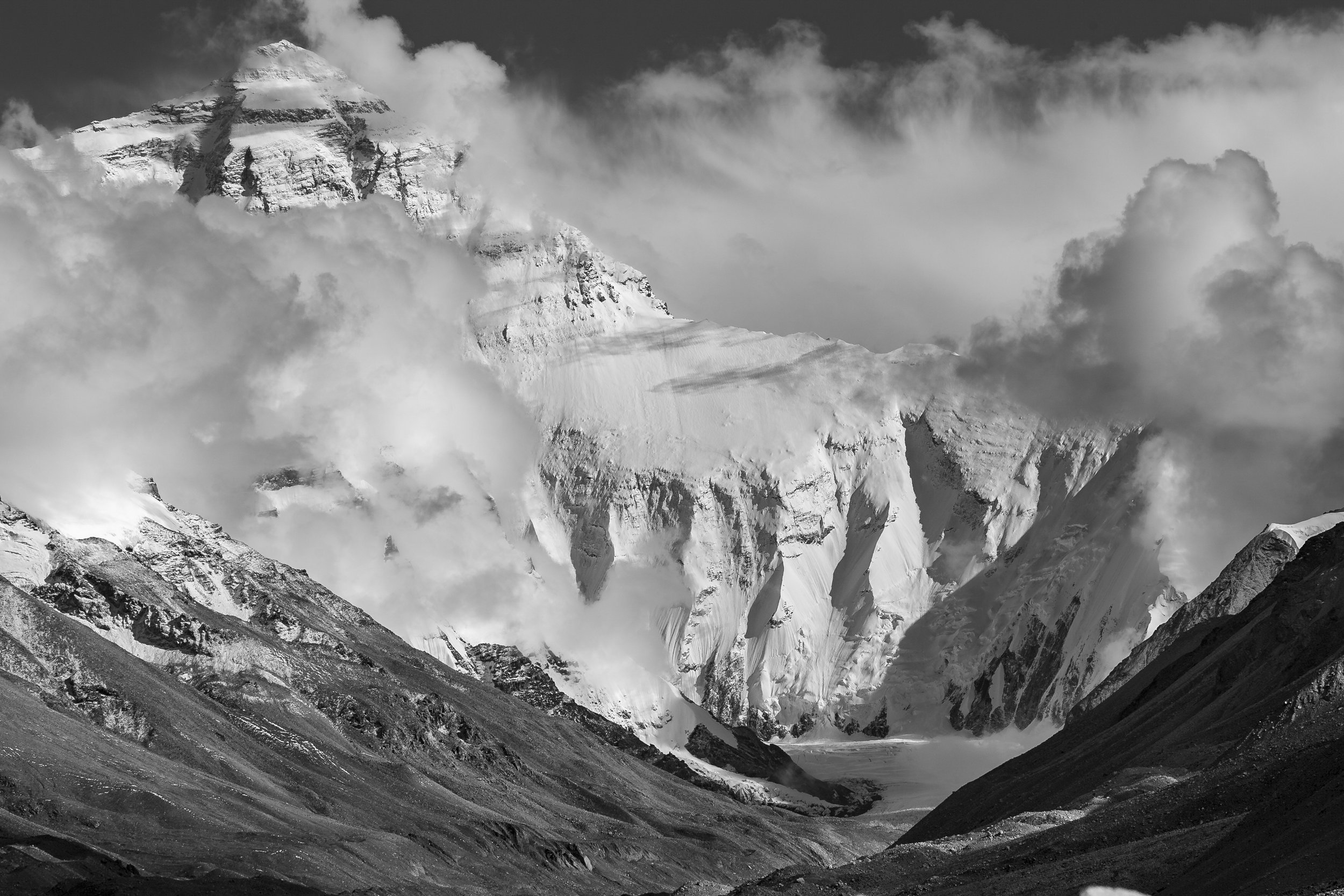
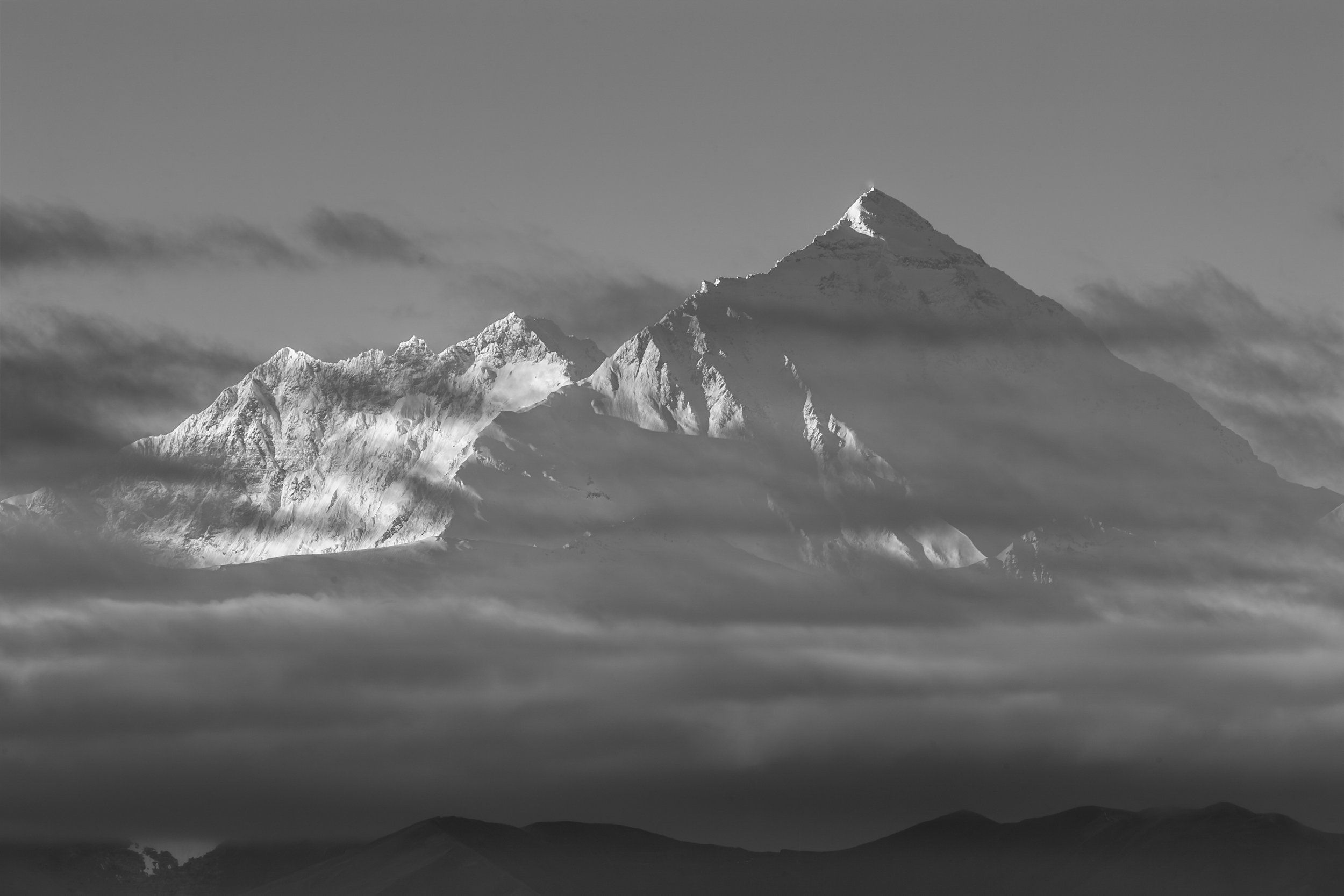
For the first time, Mount Everest stood fully revealed.
The entire north face rose before me — 3,660 vertical metres of rock, ice, and snow, dwarfing everything else in view. I was standing at an elevation higher than most mountains in the world, yet Everest still towered impossibly above me.
The scale was overwhelming.
I remember feeling small — not insignificant but properly placed. Everything I thought I understood about mountains was quietly recalibrated in that moment.
I was no longer approaching Everest.
I was standing beneath it.
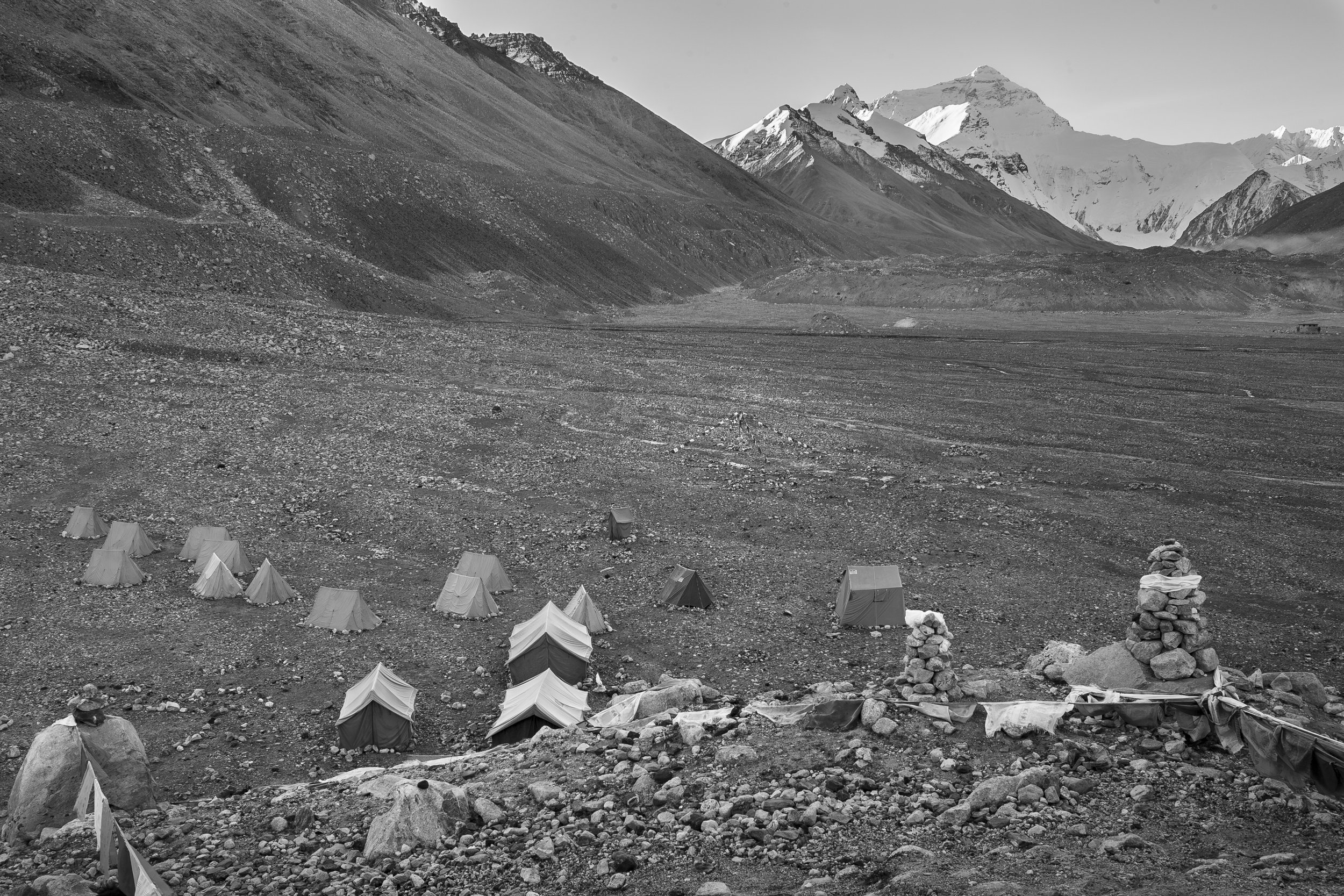
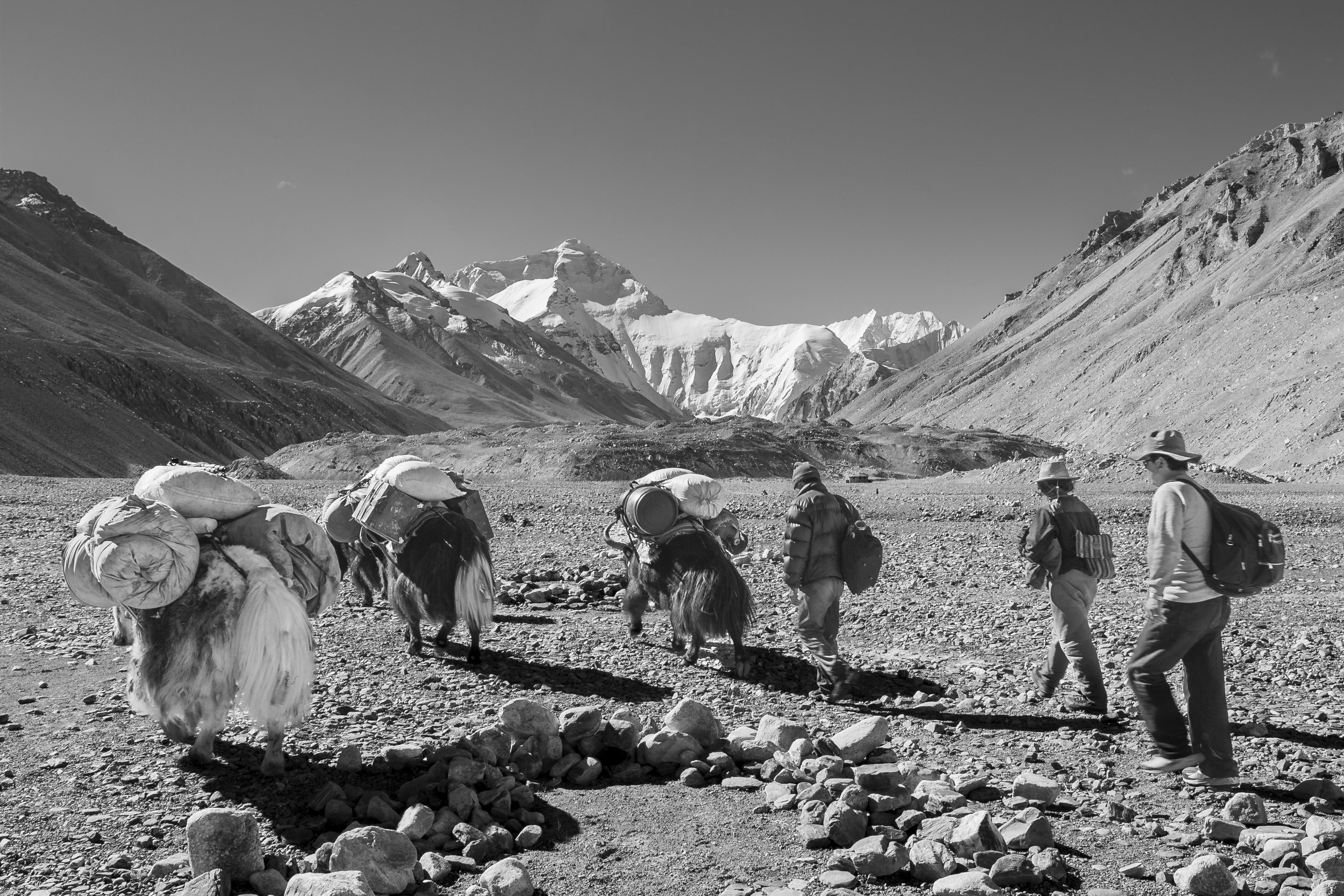
From the monastery, we continued to Base Camp, where we had already arranged to meet Dawa, a local herder, and his four yaks, which would carry our gear higher onto the East Rongbuk Glacier. On the glacier, we established a camp at 5,550 metres and spent two nights surrounded by rock, ice, and glacial rivers.
From that camp, Dawa and I climbed higher still — toward the ice seracs at 6,100 metres.
There was no real destination.
The number itself was arbitrary, a round figure more than a goal, chosen largely because the ice formations rose there, and I wanted to see them. I had not come to Everest with thoughts of summiting, nor with any desire to “go higher” in the conventional sense. Unlike some mountain journeys I had known, where reaching a summit defined success, this one had no such endpoint.
And standing there, that absence felt deliberate — and liberating.
There was no finish line ahead, no marker that would signify achievement or failure. The climb was not about conquest or progression. It was about presence — being on the mountain itself, moving within it, breathing its thin air, and allowing its scale and silence to define the moment.
At lunch, Dawa and I sat together on the glacier, surrounded by towering ice seracs that glistened in the thin light. We could not speak to one another, but language felt unnecessary. We shared food, altitude, and silence on a mountain known to the entire world.
I remember thinking, very clearly: I am in the Himalayas. I am on Everest.
The moment felt almost spiritual — not dramatic, not triumphant, but deeply grounded. A quiet acknowledgment of place without ambition, of effort without expectation. There was nothing to prove, nowhere else I needed to go, nothing to say.
Only the mountain — and the rare privilege of being present within it.
The journey ended the way it began — quietly. A walk back to Base Camp. A road. A final sunrise from Pang La that gifted me a spectacular panorama of the great peaks. A long drive back across the plateau.
But something fundamental had shifted.
This first Himalayan journey — this first encounter with Everest — created a need to return. A pull that never faded. The Himalayas revealed themselves not merely as mountains, but as a place of depth, culture, and meaning that could not be replicated elsewhere.
I did return.
Not yet to Tibet again, but to the greater Himalayan world — twice to Bhutan, five times to Nepal, and repeatedly back into high mountain landscapes that continue to shape me. I have visited mountains across the world, many of them extraordinary. But the scale, power, and presence of the Himalayas — and of Everest — remain singular.
This journey was not an end.
It was a beginning.
My First Himalayan Journey – Image Gallery ⟩