Gutor Chenmo
A Ritual of Cleansing and Impermanence
Story by Chadani Lama | Photographs by Steve Fagan
When I arrived at Pal Dilyag Monastery that morning, the sky was softly golden. A steady drumbeat echoed in the distance, calm and deliberate, like the monastery’s breath. It was February 22, 2020, a moment between the end of one lunar year and the beginning of another. The day of Gutor Chenmo.
Gutor Chenmo. The name embodies both strength and gentleness. It serves as a ritual of cleansing and invitation, a sacred pause before the wheel of the year turns again. Its purpose is both fierce and compassionate: to acknowledge, confront, and burn away the demons that linger in the shadows of our choices. Not demons of horns and fire, but invisible ones, guilt, jealousy, anger, ignorance, and desire.
Though I was raised in a Buddhist family and aware of many rituals, this one felt uniquely different, more meaningful, profound, and wise. I was familiar with the rhythms of pujas, the earthy aroma of sang (purification incense), and the steady chant flows. Yet Gutor Chenmo carried an immense weight. This ritual reminded me of the Tibetan sand mandala, one of the most captivating practices, where monks spend days crafting them, layer by layer with colored sand, forming intricate sacred geometries, only to sweep them away once finished, erased deliberately, not with sadness but with dignity and grace, a ceremony of release, honoring impermanence, a cosmic truth many of us spend our lives trying to deny.
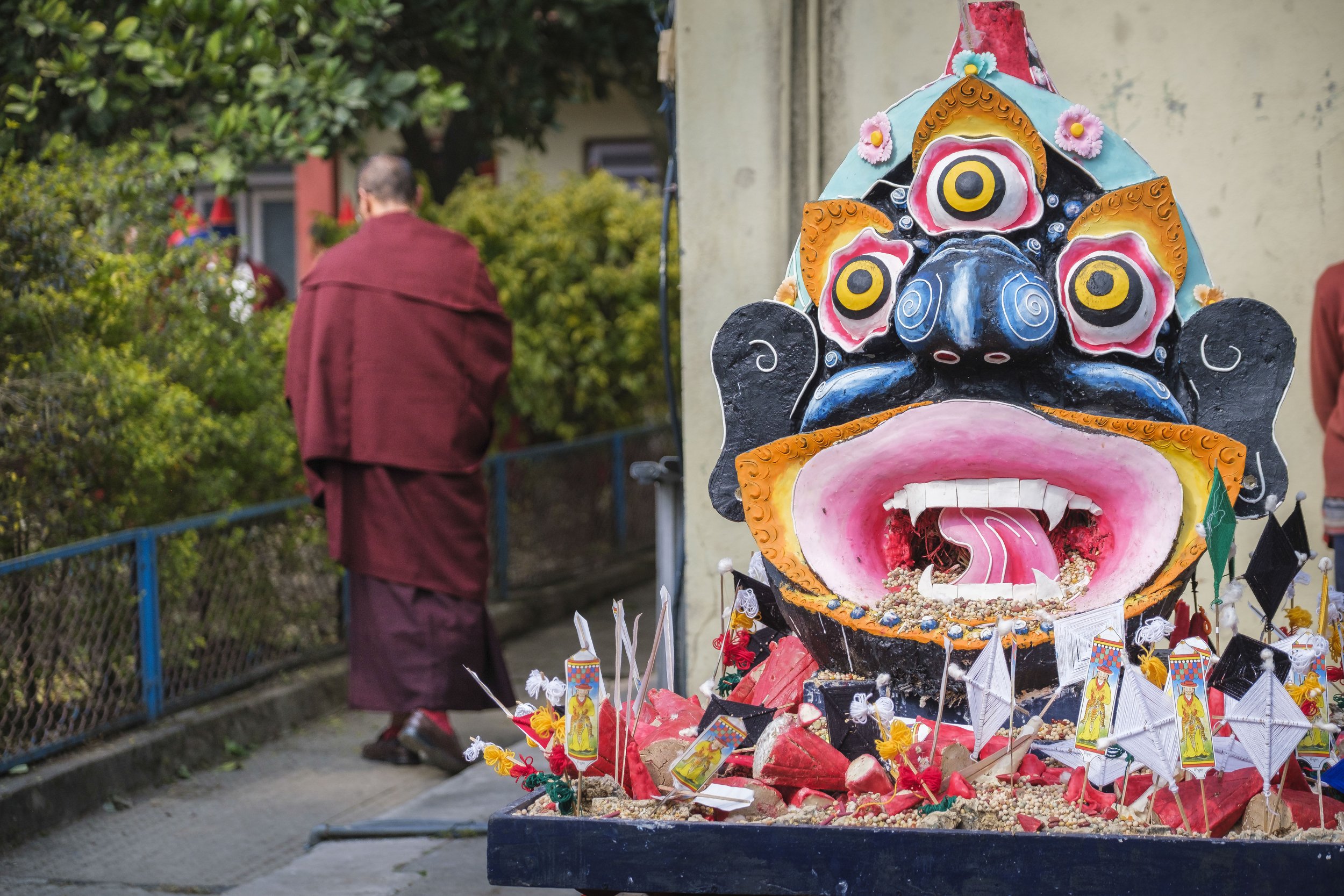
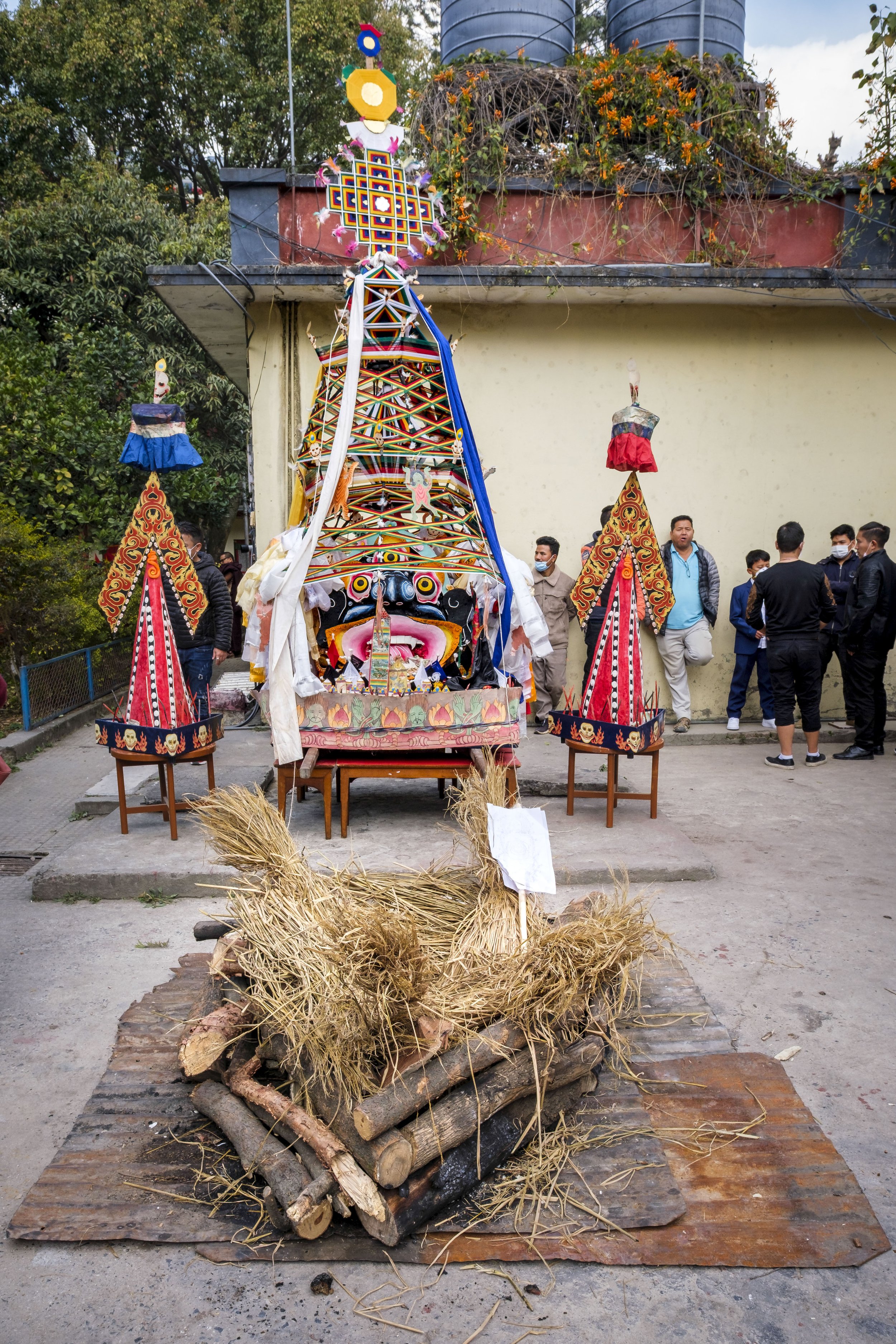
At Pal Dilyag, the monks weren’t making sand mandalas. Instead, they crafted something entirely different: the Great Mahakala Torma. Using tsampa (roasted wheat flour), butter, honey, sugar, and milk, and colored with vibrant pigments, the monks, trained in devotion and discipline, carefully shaped it. Every detail, from Mahakala’s fierce expression to the intricate curves, was intentional. Sacred and purposeful, the torma appeared powerful, commanding, and alive. And like all sacred objects, it was also destined to fade.
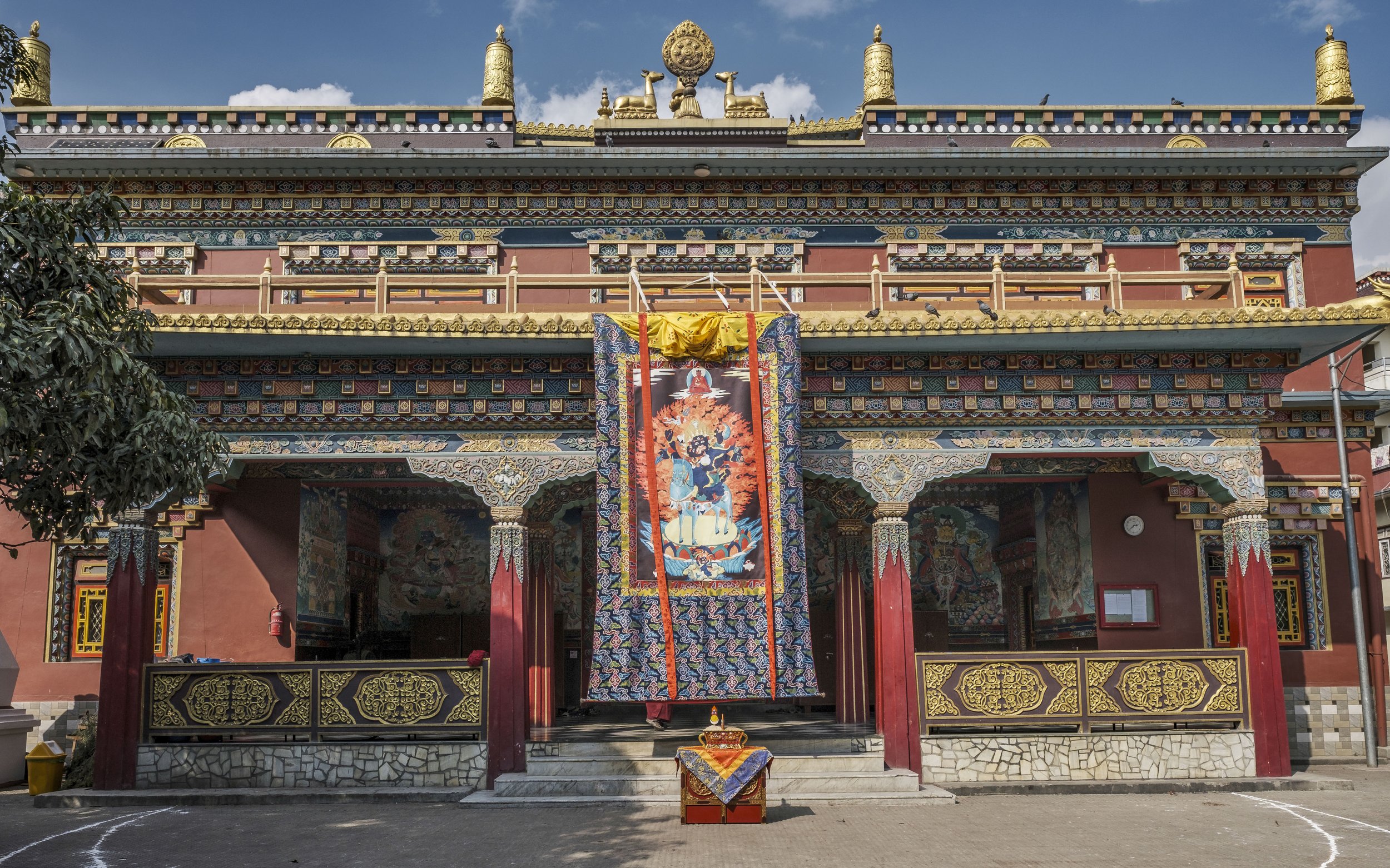
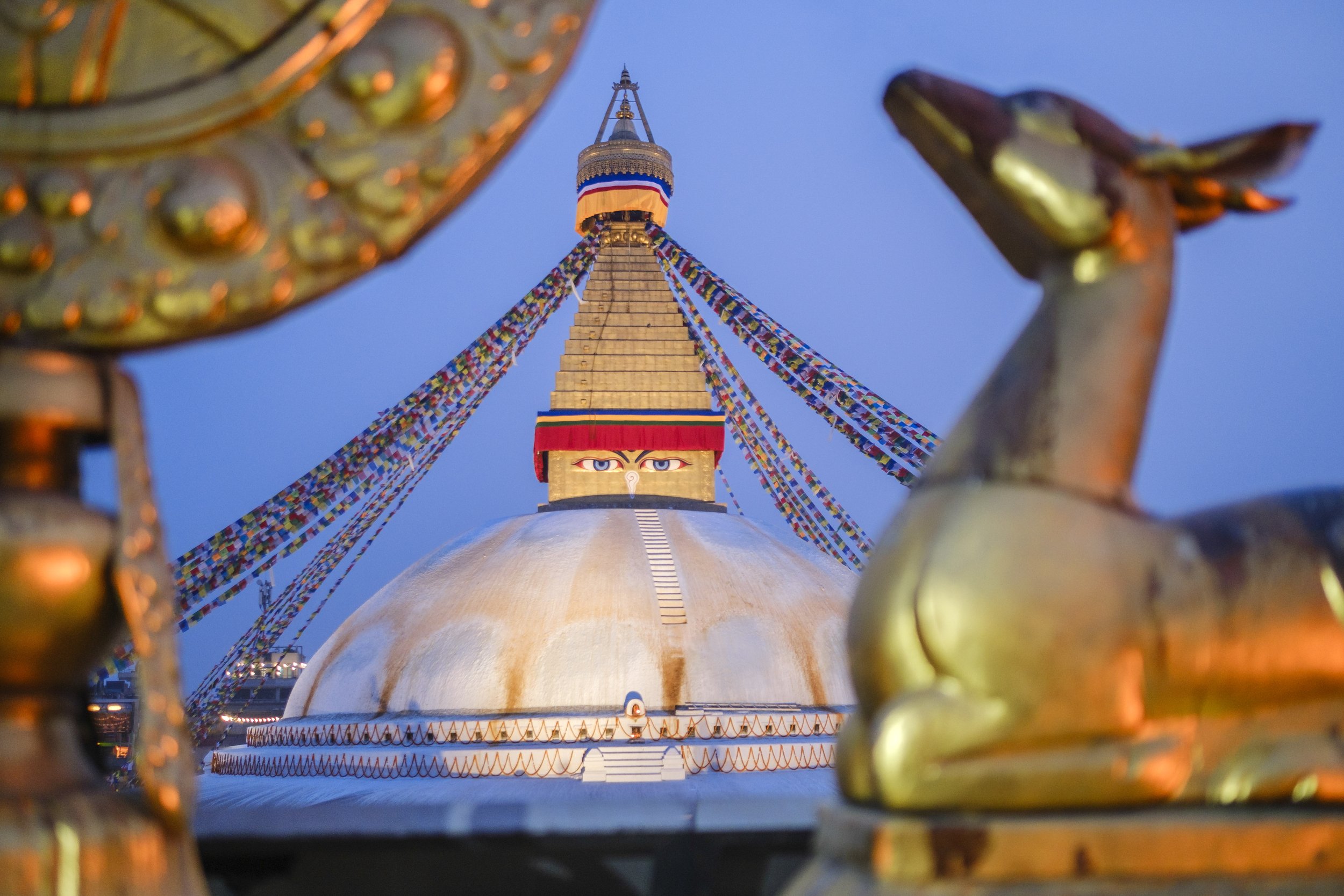
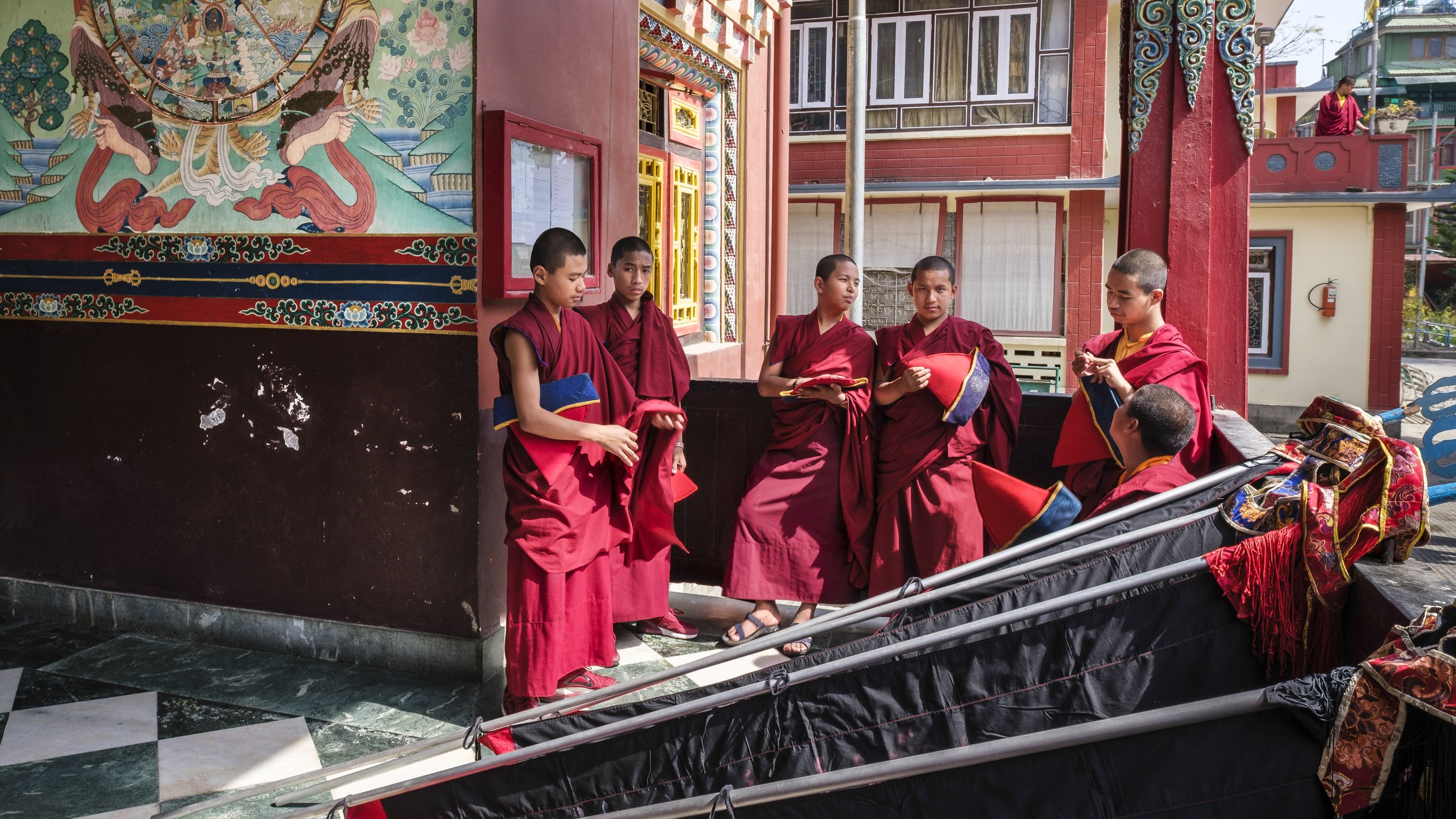
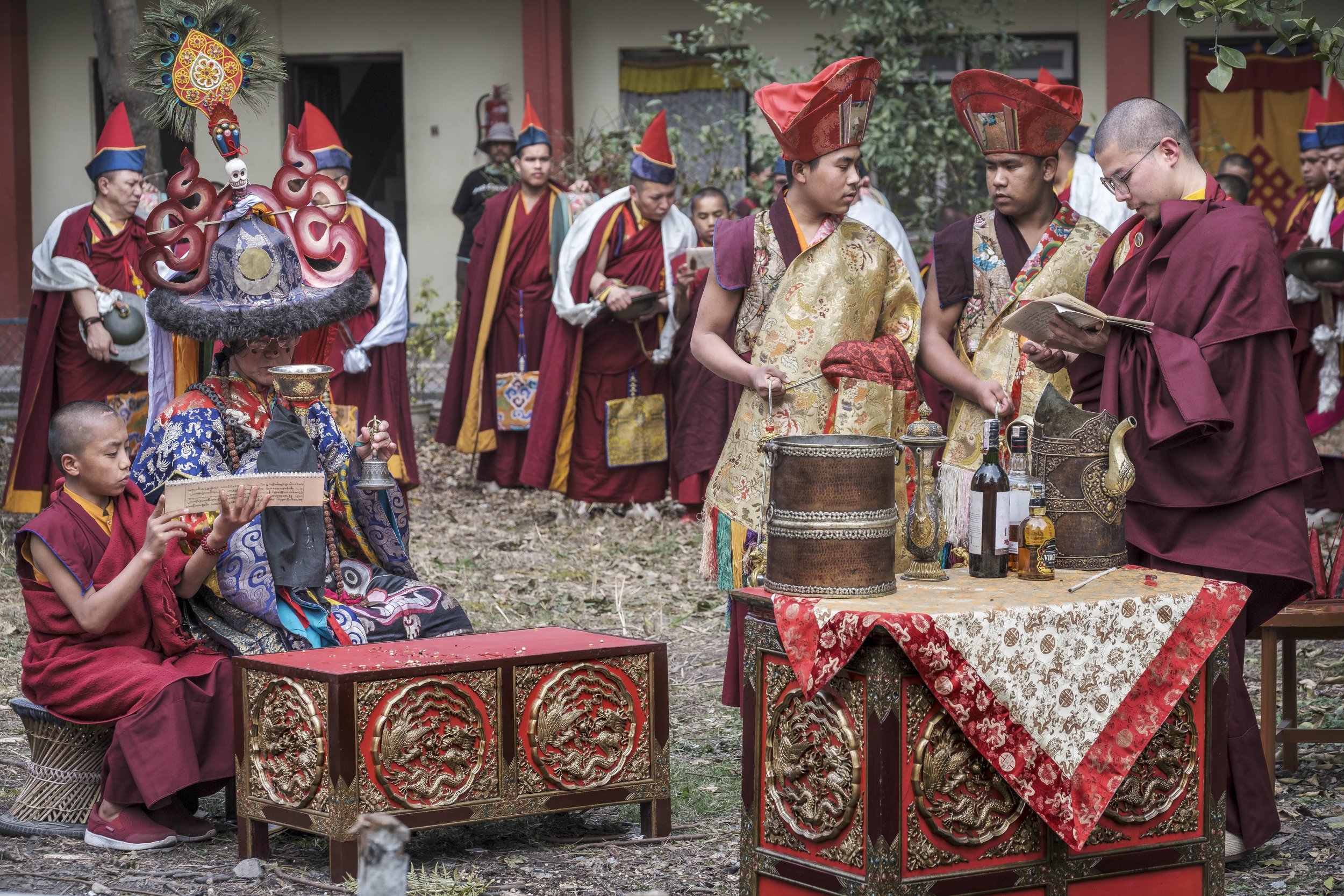
Pal Dilyag, also called Dabzang Gompa, is situated at the heart of Boudhanath, one of Nepal's most sacred Buddhist locations. Founded in 1963 by the 7th Dabzang Rinpoche, this Karma Kagyu monastery accommodates approximately 120 monks. Their red robes bring both vibrancy and tranquility to the area, where daily spiritual practices are held.
As the ritual intensified, the protectors were called forth. Mahakala, the fierce form of compassion, does not offer gentle comfort. Instead, he confronts and demolishes illusions. Holding fire in one hand and emptiness in the other, Mahakala frees not through soothing or shielding, but by destroying the masks that conceal clarity.
Inside the prayer hall, monks sat in long rows, chanting for hours. Outside, everyday life intertwined with the sacred. Local residents gathered nearby, curious and unfearful. For them, this was not merely a spectacle; it was an inheritance, a lesson absorbed not through words but by observing a profound ritual.
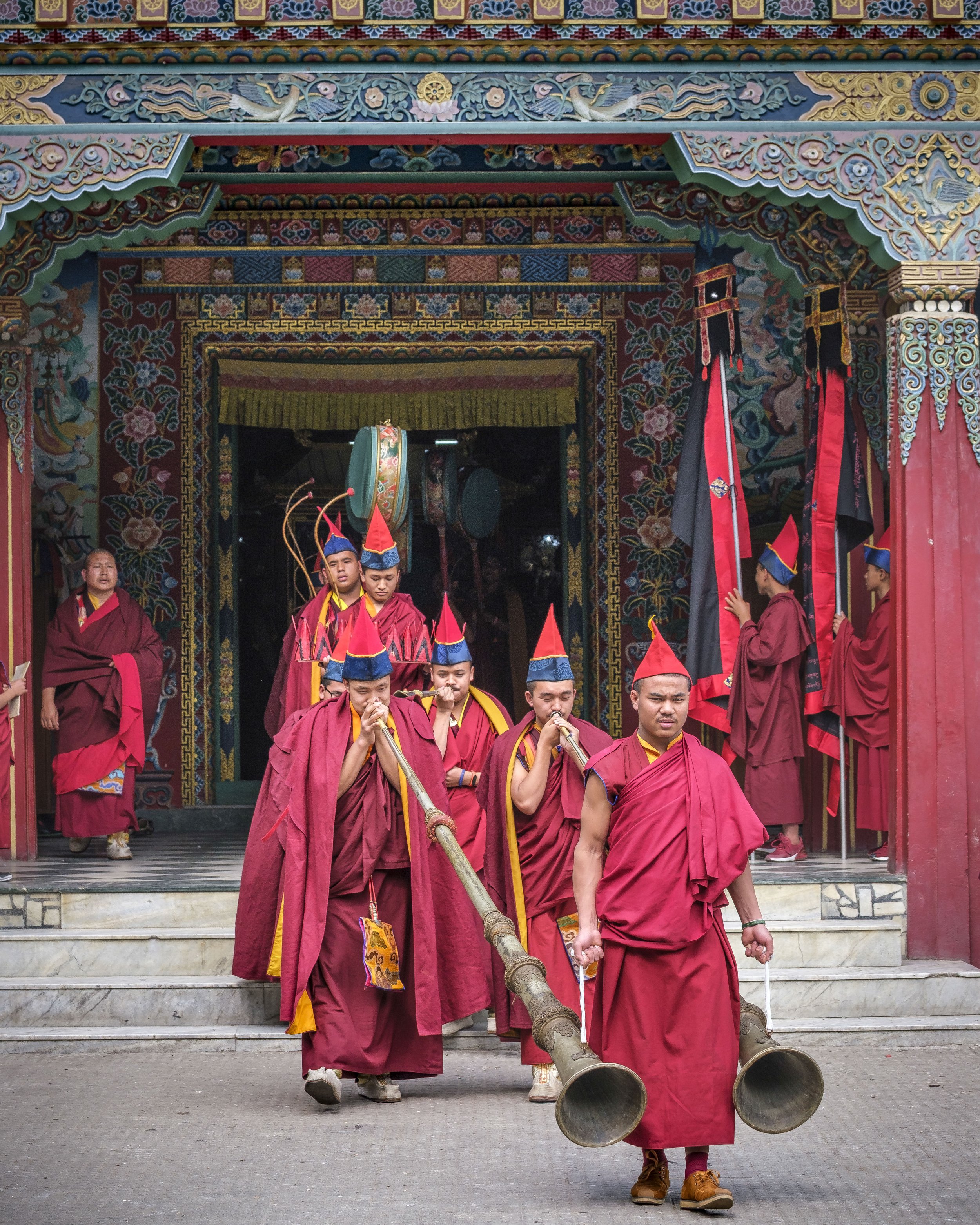
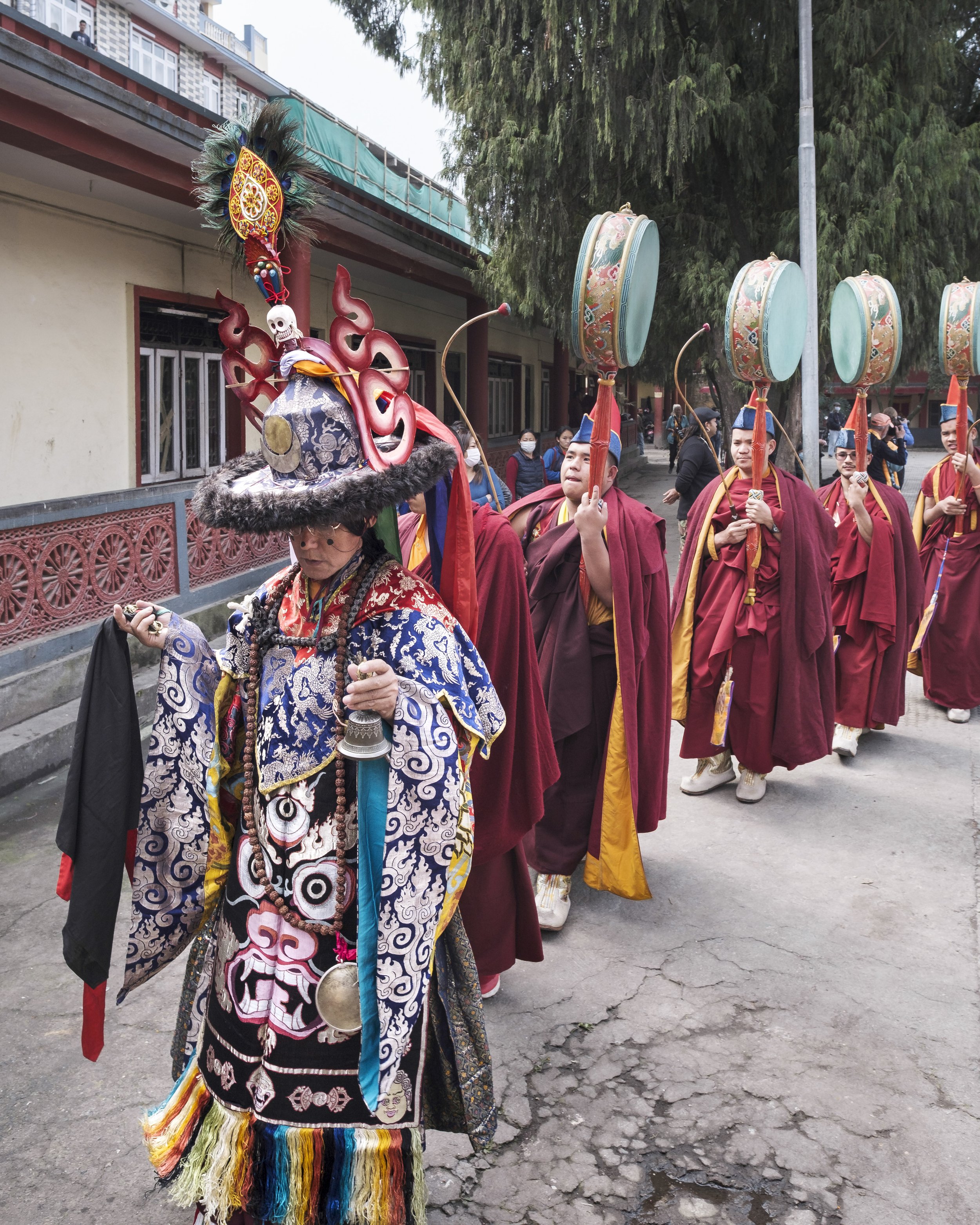
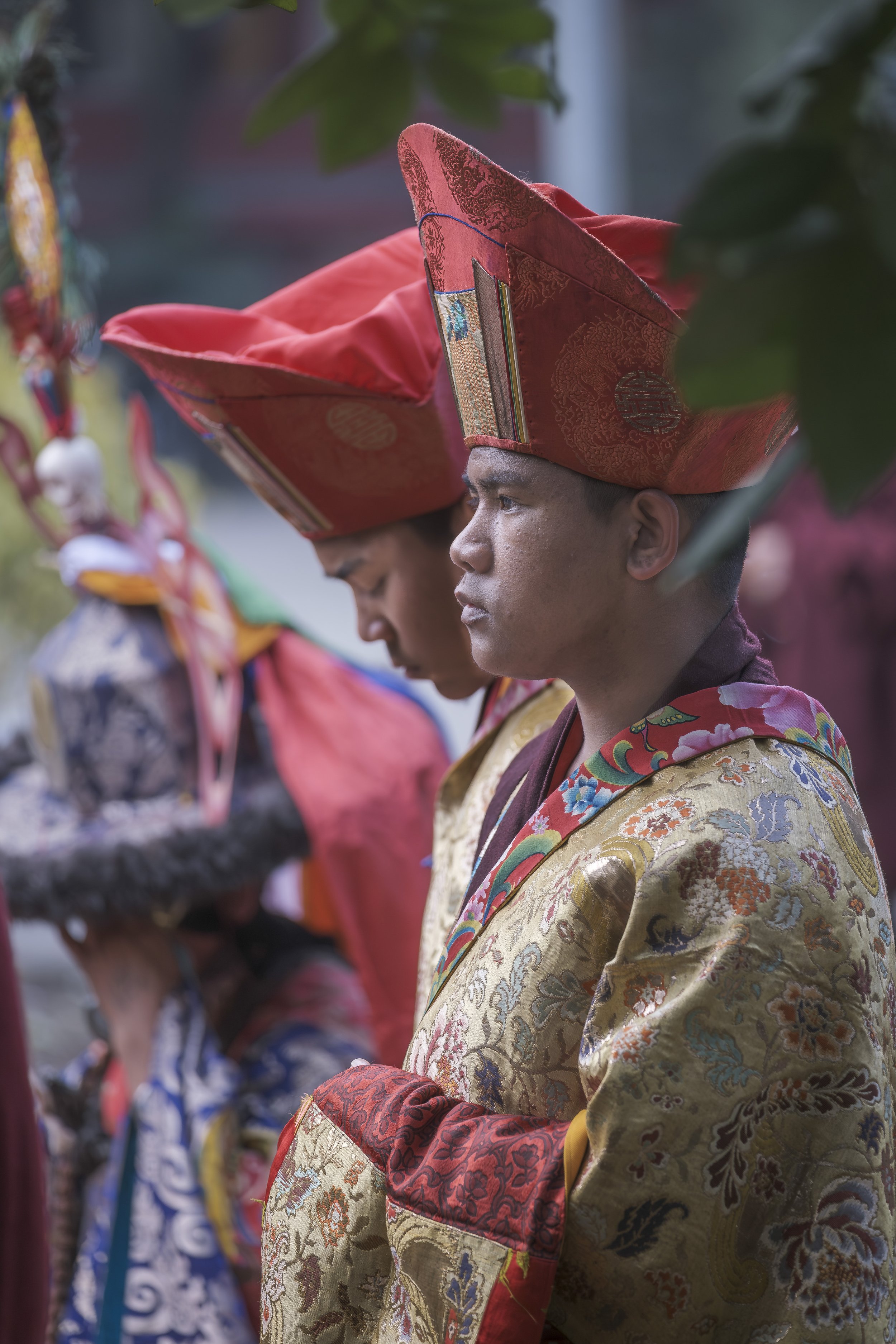
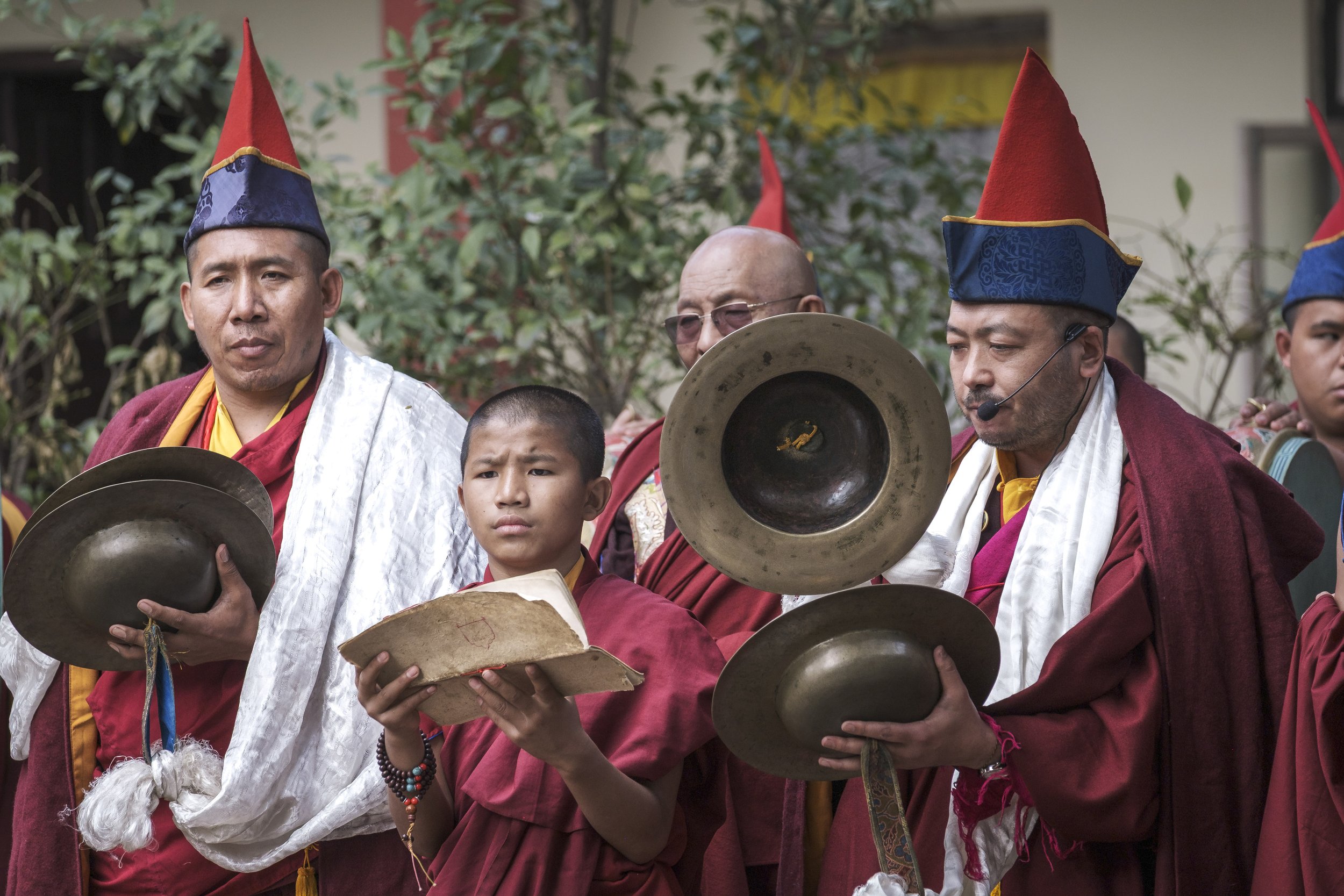
At noon, the monastery doors opened to reveal a procession. The Great Torma was carried by local community members, with monks walking in synchronized rhythm behind. The air was filled with the deep sound of dung chen horns, gyaling flutes, cymbals, and the steady beat of drums. Locals, pilgrims, and spectators gathered silently around the monastery grounds. I followed, sensing that something ancient and profound was happening.
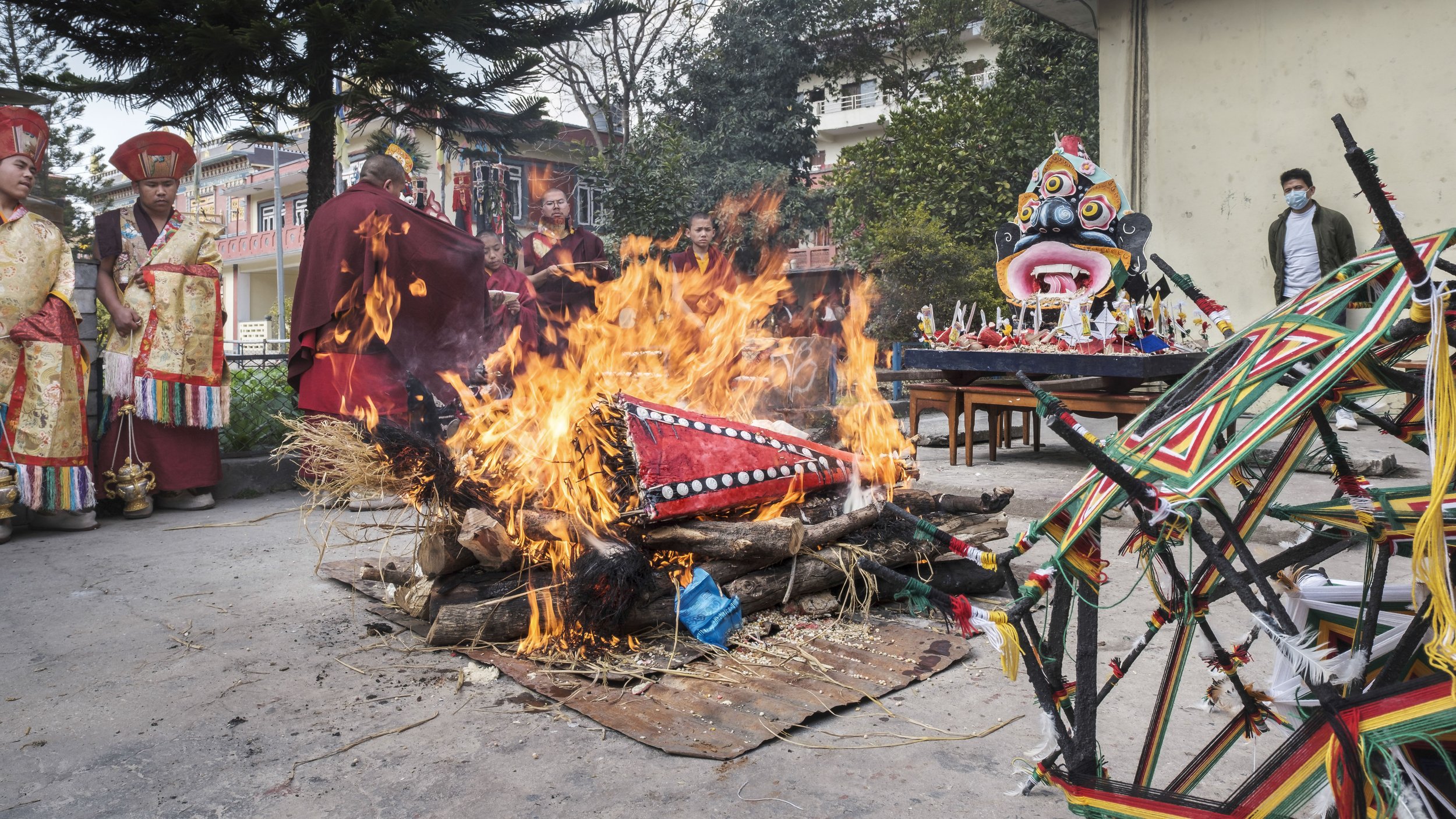
The Vajra Master appeared, clothed in a blue brocade robe, his face adorned with sacred symbols, and his headdress rising like a crown. As he started the final invocations, each verse did not condemn negativity but welcomed it. Fear, greed, anger, loss, and desire, carefully drawn into the torma. These feelings were acknowledged, named, and honored. Finally, with a single prayer, the fire was lit.
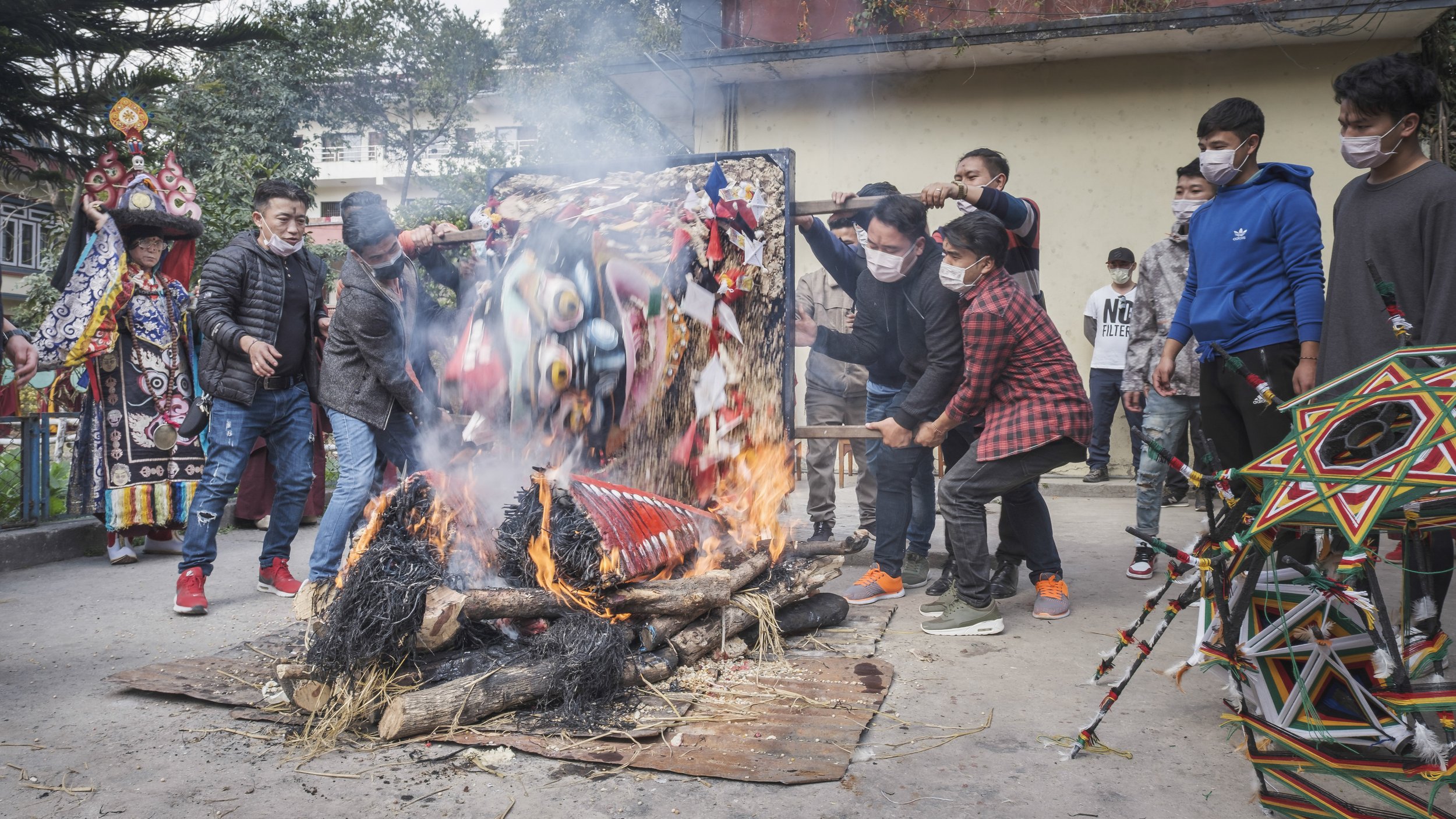
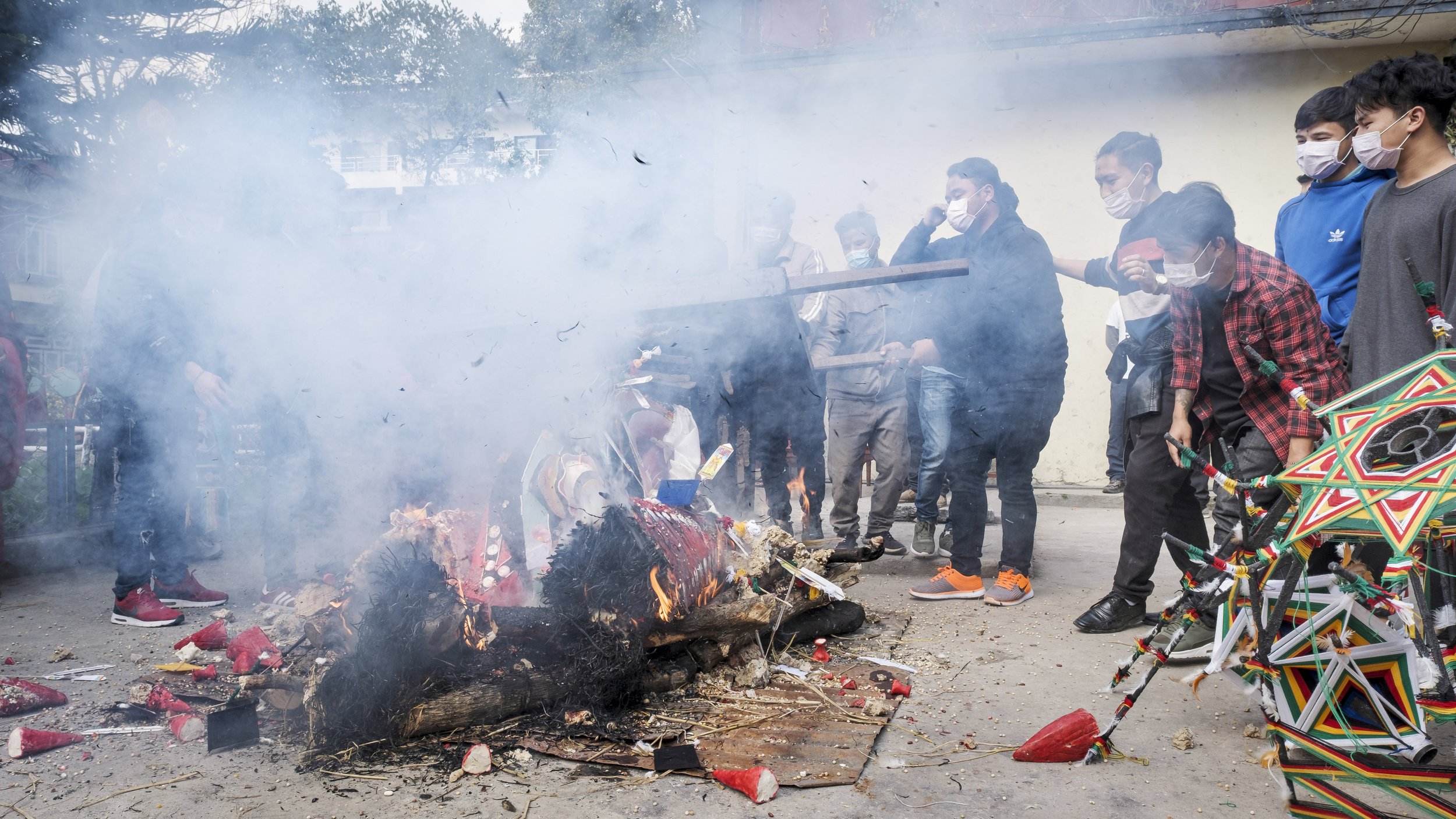
The torma did not surrender quietly. As it was tipped toward the flames, its painted face twisted in mid-fall, with wide eyes, an open mouth, and an exposed tongue, caught momentarily between form and collapse. Then, the fire took it. Butter hissed, pigments flared briefly before melting into smoke, and flour cracked and fell apart. What had been painstakingly crafted, intricate, powerful, divine, was consumed by fire. Its destruction did not lessen its beauty; instead, it completed it. The monks did not cling to the destruction of their carefully made work. Instead, they bowed.
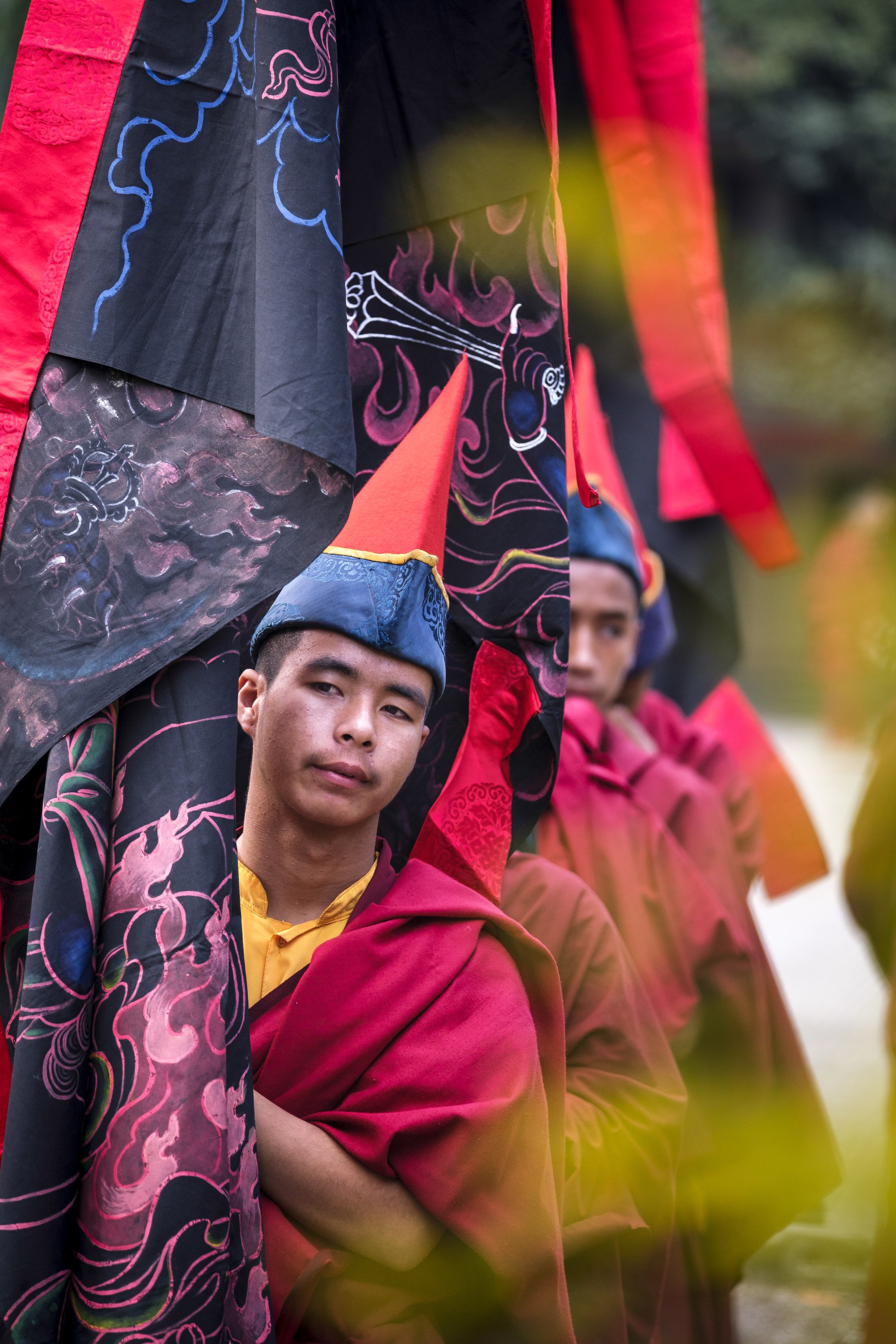
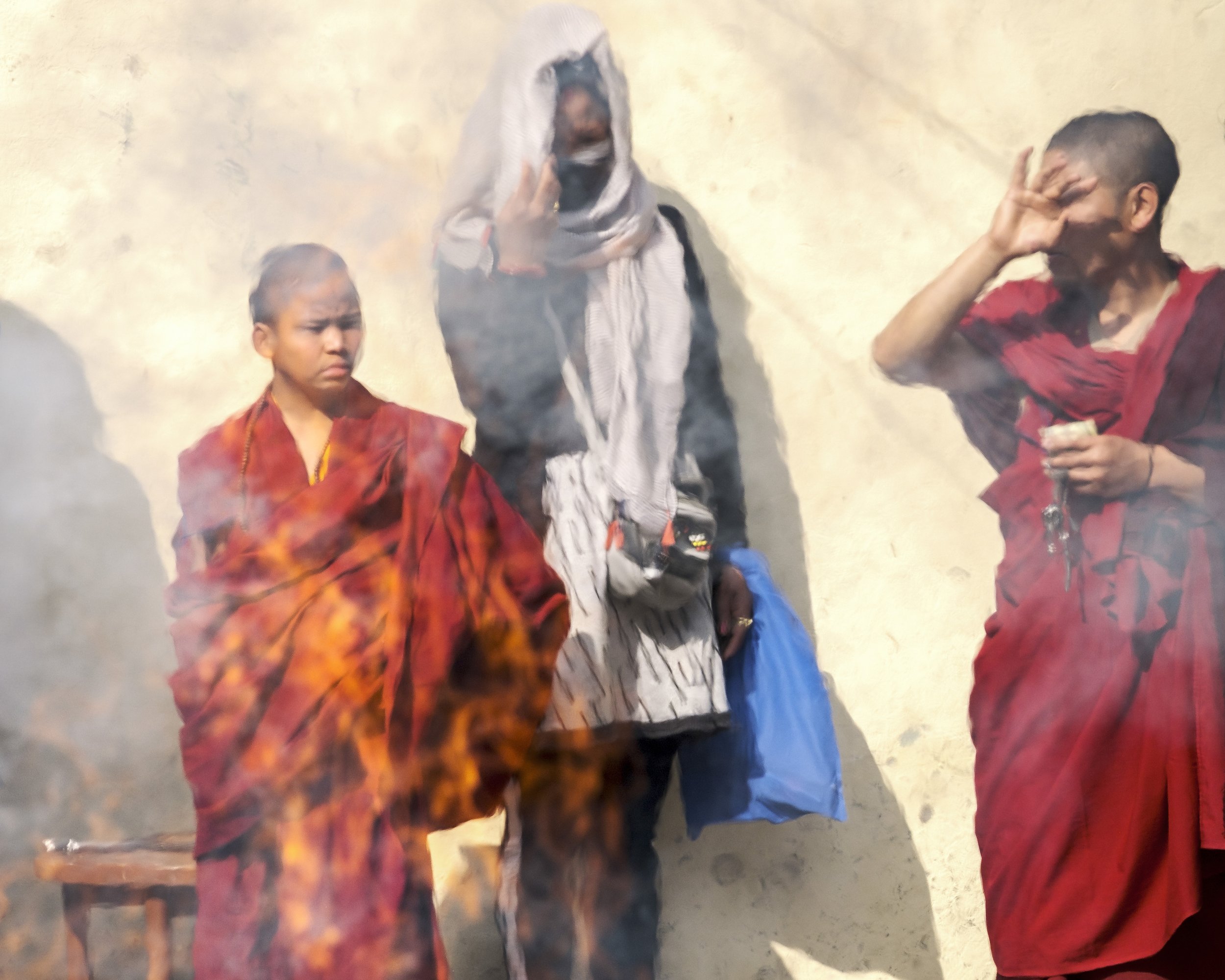
The smoke thickened, turning the courtyard into a veil. The ritual now began to penetrate the body, the lungs, the eyes. Some covered their mouths with masks. Some shielded their eyes. Others stood barefaced, accepting the smoke without resistance. The fire made no distinction between the ordained and the ordinary. It welcomed everyone equally. The ritual props, brightly threaded frames once spun and carried with purpose, now awaited the same end. What remained lay low, a red torso collapsed inward, blackened, grains scattered across the ground. As the fire rose higher, Mahakala no longer had a face. Only heat persisted. The great protector was reduced to matter once more, back to its original form. Gradually and inevitably, even the fire softened.
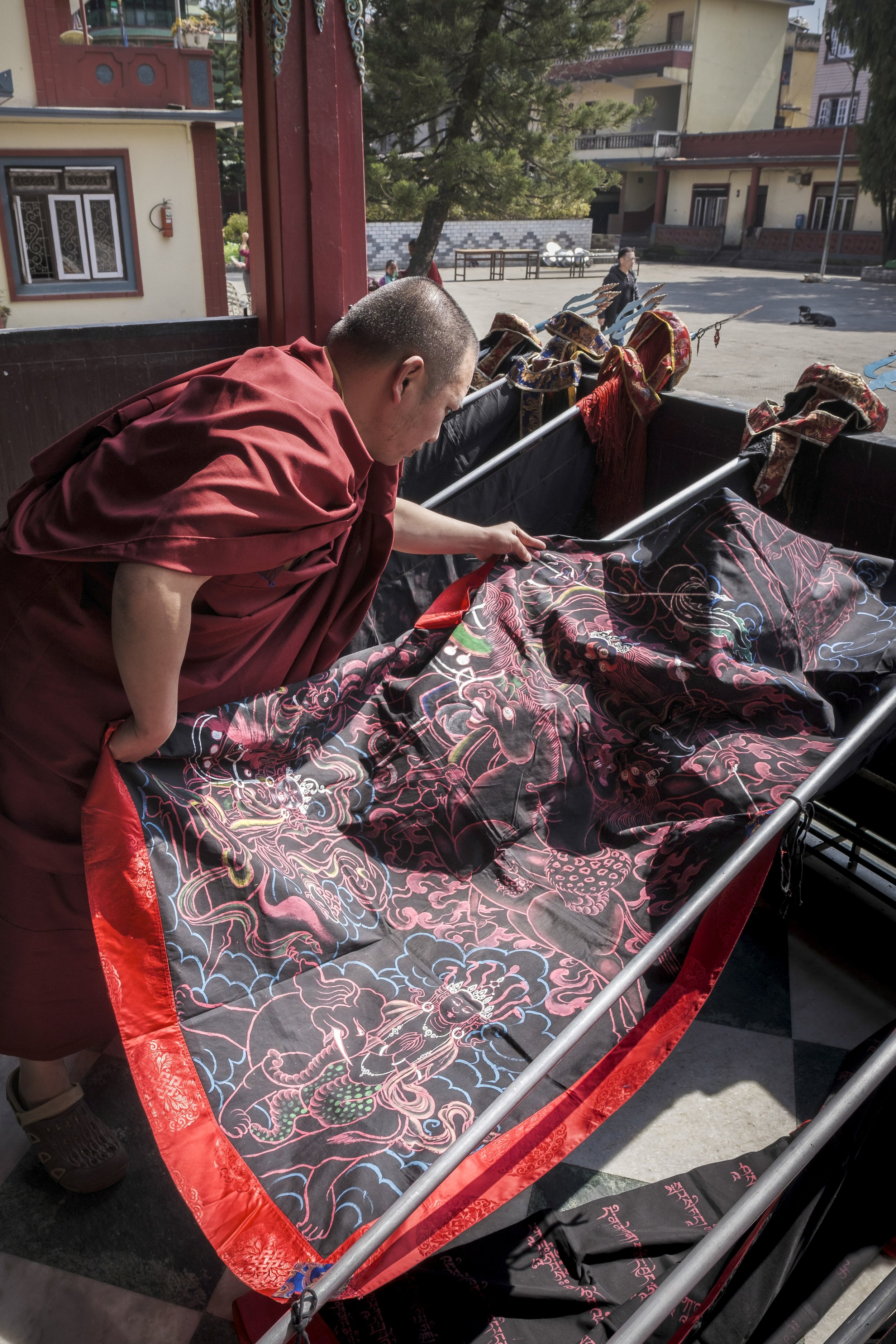
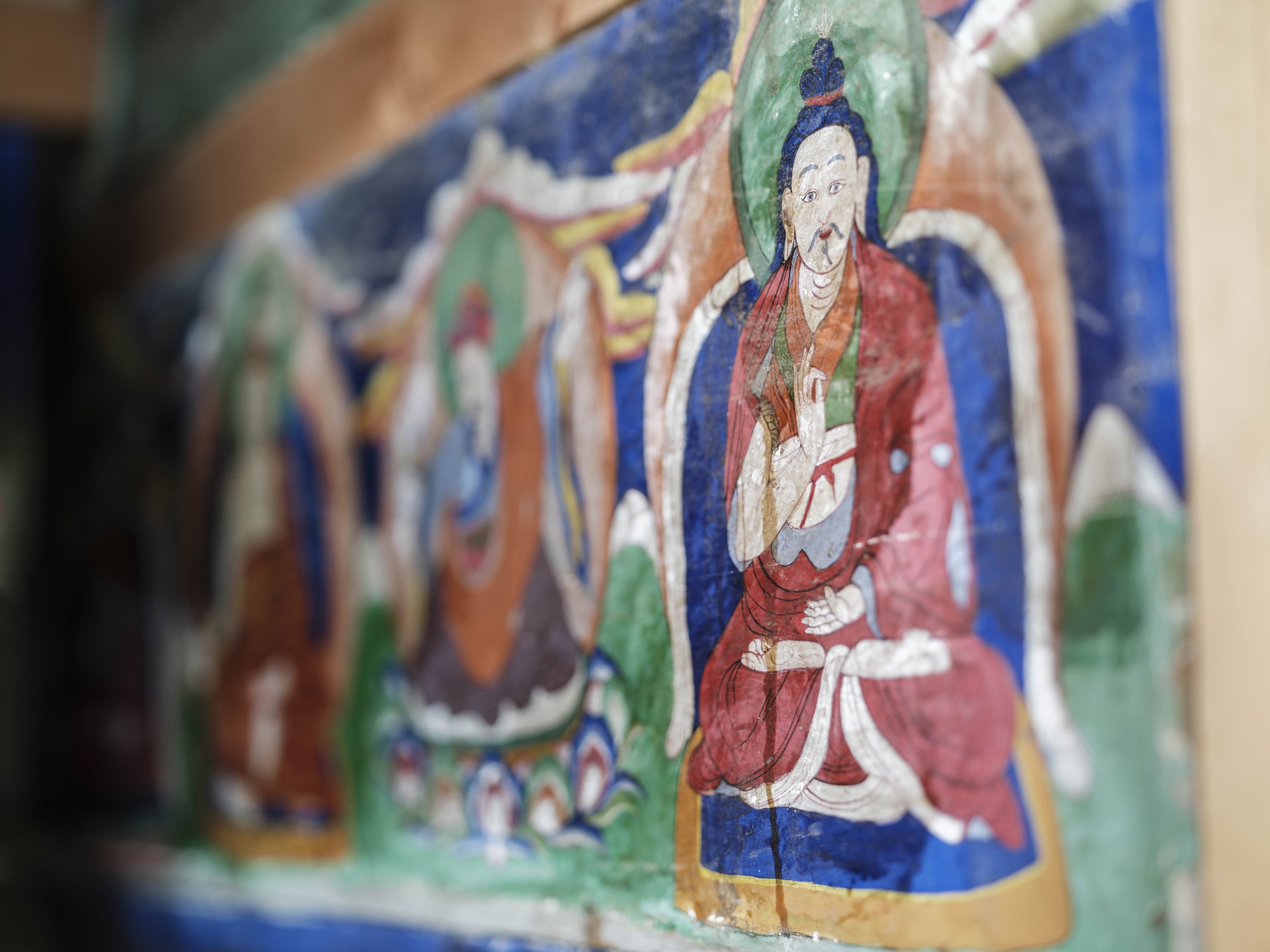
Behind everything, the monastery stayed the same. Walls were painted, banners and flags hung up, and Mahakala thangkas watched over. The architecture witnessed the ritual silently, just as it always has. As the fire died down and people gradually left, the teaching remained. We often discuss letting go, transformation, and moving forward. However, seeing something so deliberately made, so full of meaning, given back to impermanence teaches a different, more difficult lesson. Yet, it also feels more genuine.
Mahakala had finished his work. The darkness was banished. Space was cleared. And in the ashes, I sensed something unexpected: a relief. Relief of simplicity, acceptance, and remembering that nothing lasts, and yet, everything matters. Maybe we all live within mandalas. Maybe our days are circles, born each morning, vivid by noon, and quietly erased by dusk. And perhaps that is the point. Not to cling, but to participate. To create. To offer. And to let go.
Gutor Chenmo isn't just a ritual for monks. It's an invitation for all of us, to clear what needs clearing, to face what we hide, and to humbly kneel before impermanence. Pal Dilyag taught me this in February 2020, just weeks before the world would enter a cycle of pandemic and isolation. The timing was no coincidence. Sometimes the universe presents a small fire so that we may be prepared for a much larger one.
Gutor Chenmo – Image Gallery ⟩